
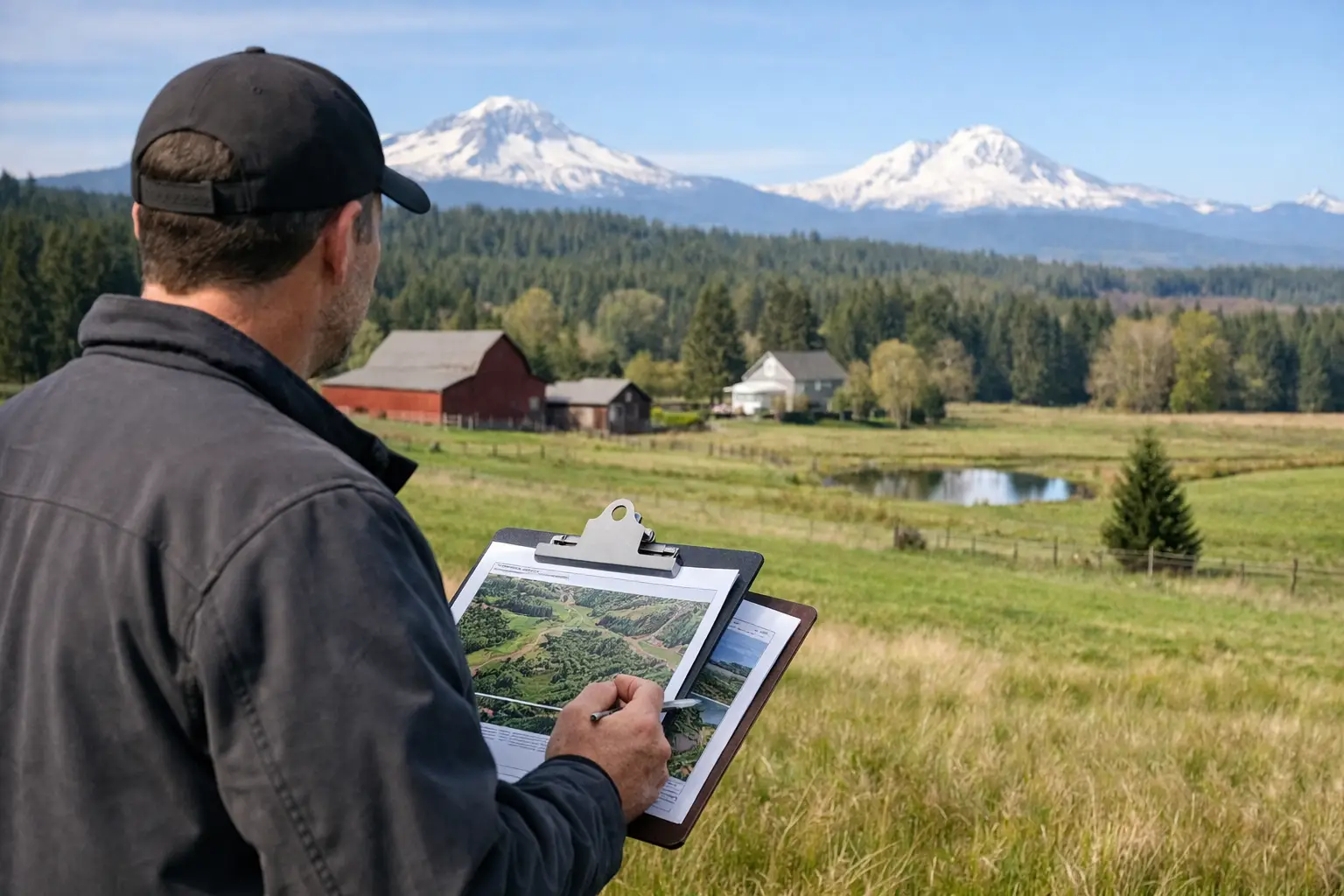
A five-acre listing can look like a wide-open opportunity from a satellite image. Then you visit it and find that one acre is a driveway, another is steep ground, and the usable building area sits farther from power than expected. That is why learning how to assess Oregon acreage starts with more than acreage, price, and a pretty view. The real question is what the land can realistically do for your plans.
For buyers considering Bend, Redmond, and the surrounding Deschutes County area, acreage can mean privacy, room for animals, a workshop, a custom home, or a long-term land investment. It can also bring costs and restrictions that are easy to miss when you are shopping from out of town. A careful evaluation early in the process helps you pursue the right property with clear expectations.
Start With Your Intended Use
Before evaluating a parcel, define what you want the acreage to support. A buyer who wants a single home and extra elbow room is looking at the land differently than someone who wants horses, a small agricultural operation, a large shop, or a future family compound.
Be specific. Do you need flat ground for an arena? Enough sun exposure for a garden? Space for RV parking? A private drive that can handle guests and service vehicles? Your intended use determines which constraints matter most.
It also helps separate “nice to have” acreage from land that actually supports your lifestyle. Ten usable acres may be far more valuable to you than forty acres with limited access, challenging terrain, or restrictions that do not fit your plans.
How to Assess Oregon Acreage Beyond the Listing
Listing details are a starting point, not a complete land report. The assessor’s acreage number may include land that is difficult to use, subject to easements, or separated by natural features. Walk the property whenever possible, and do not limit the visit to the obvious clearing or existing home site.
Pay attention to the property boundaries, changes in elevation, tree cover, drainage patterns, road noise, and neighboring uses. If the acreage feels different on the ground than it did online, trust the field visit. Local context matters. A parcel can be close to town yet feel remote, or it can appear private while sharing a well-traveled access road.
Ask for a survey when one is available, but do not assume fences, markers, or informal driveway locations establish legal boundaries. A survey, title review, and professional advice are especially worthwhile when a boundary location affects where you want to build, fence, or place improvements.
Access Is More Than Finding the Driveway
Legal, practical access is one of the first items to verify. Does the parcel front a public road, or does it rely on an easement over another property? If there is an easement, review its recorded terms. It should clearly establish who can use it, where it runs, and who is responsible for maintenance.
A shared private road can be perfectly workable, but buyers should understand the arrangement before writing an offer. Ask about road agreements, annual costs, gate access, seasonal maintenance expectations, and whether the route can accommodate construction equipment if you plan to build.
Also look at the driveway itself. A long or unfinished drive can add meaningful cost to a project. The same is true for a road that needs drainage work, clearing, or additional base material. These expenses do not always show up in the list price, but they belong in your total budget.
Confirm Zoning and Buildability Early
County zoning sets the framework for what may be allowed on a parcel. It can affect whether you can build a home, add an accessory dwelling, keep certain animals, operate a home-based business, divide the land, or use it for agricultural purposes.
Do not rely on a seller’s description alone. Verify the zoning designation and ask how it applies to your specific plan. Two rural parcels with similar size and scenery may have very different development possibilities.
Buildability deserves its own conversation. A parcel is not necessarily buildable simply because nearby properties have homes. Confirm whether there is a recognized homesite, whether the lot was legally created, and what permits or reviews may be required. If the property is in an area with special overlays or resource protections, those can influence site placement and timelines.
For buyers hoping to create future value through a split or additional residences, take a conservative approach. Land-use rules can be detailed, and assumptions about subdivision potential are a common source of disappointment. Buy the property for what it supports today unless future options have been verified.
Water, Wells, and Septic Capacity
Water is central to the value and daily enjoyment of acreage. Start by identifying the source. Is there an existing well, a shared well, a community water connection, or another arrangement? If there is a private well, review available records, ask about production, and understand the condition of the equipment.
Water rights are a separate issue from domestic household water. If your plans include irrigation, livestock, or larger-scale growing, ask whether water rights convey with the property and what those rights allow. A green field or established landscaping does not automatically mean transferable irrigation rights are in place.
Septic is equally important for undeveloped land. Determine whether a septic system exists, whether there are permits and maintenance records, and where the drainfield is located. For vacant acreage, investigate whether the site has been evaluated for a septic system and what type may be needed. Soil conditions, lot layout, and setbacks can all affect the result.
A building site may need to accommodate a home, well, septic components, required setbacks, and access. That is why a parcel can have plenty of total acreage but a limited practical building envelope.
Study Soils, Topography, and Usable Ground
Soil is not a glamorous part of a land search, but it affects nearly every use of acreage. It can influence septic feasibility, drainage, gardening, pasture quality, foundation planning, and the cost of building roads or outbuildings.
Look beyond whether the ground appears flat. Walk it after considering how water moves across the site, where vehicles will travel, and whether equipment can reach your preferred building area. Slopes, rock, uneven terrain, and dense vegetation can alter both construction costs and day-to-day usability.
If you are buying land for horses or agricultural use, examine the layout as closely as the total acreage. Is there enough contiguous open ground? Can fencing be installed sensibly? Is there room for a barn, shelter, turnout area, and vehicle access without crowding the home site? The best fit depends on your goals, but these questions reveal whether the land works as well as it looks.
Price the Infrastructure, Not Just the Land
A lower-priced parcel can become more expensive than a higher-priced alternative once you account for the work required to make it functional. Utilities are often the biggest variable. Confirm the location and capacity of electric service, and ask what it may cost to extend power to the building site. Review internet and cell service based on your actual work and household needs, not just a provider map.
Then consider the full improvement picture: driveway work, site preparation, well work, septic, fencing, utility extensions, permits, and possible engineering. You do not need a final construction budget before making an offer, but you do need enough information to understand whether the project remains comfortable.
This is also where an experienced local lender and the right inspection professionals can be valuable. Land transactions often require a different financing conversation than a conventional in-town home purchase. Timing, down payment requirements, and the path from land loan to construction financing should be clear before contingencies expire.
Evaluate the Surrounding Area and Long-Term Value
Acreage is never entirely separate from its surroundings. Visit at different times of day if possible, drive the route to groceries, schools, medical services, recreation, and town, and pay attention to the properties around you. Nearby land uses, road conditions, and future development patterns can shape both your daily experience and resale appeal.
For investment-minded buyers, the most marketable acreage is often not the largest parcel. It is the parcel with understandable access, a credible building path, useful terrain, and a location that suits the Central Oregon lifestyle buyers are seeking. Privacy has value, but so does convenience.
The right acreage should give you room to live the way you intend, not simply a larger number on a listing sheet. When you are ready to compare properties, Mr Bend Oregon can help you look past the map pins and ask the practical local questions that protect your purchase. A thoughtful first visit can turn a promising piece of land into a confident decision.