
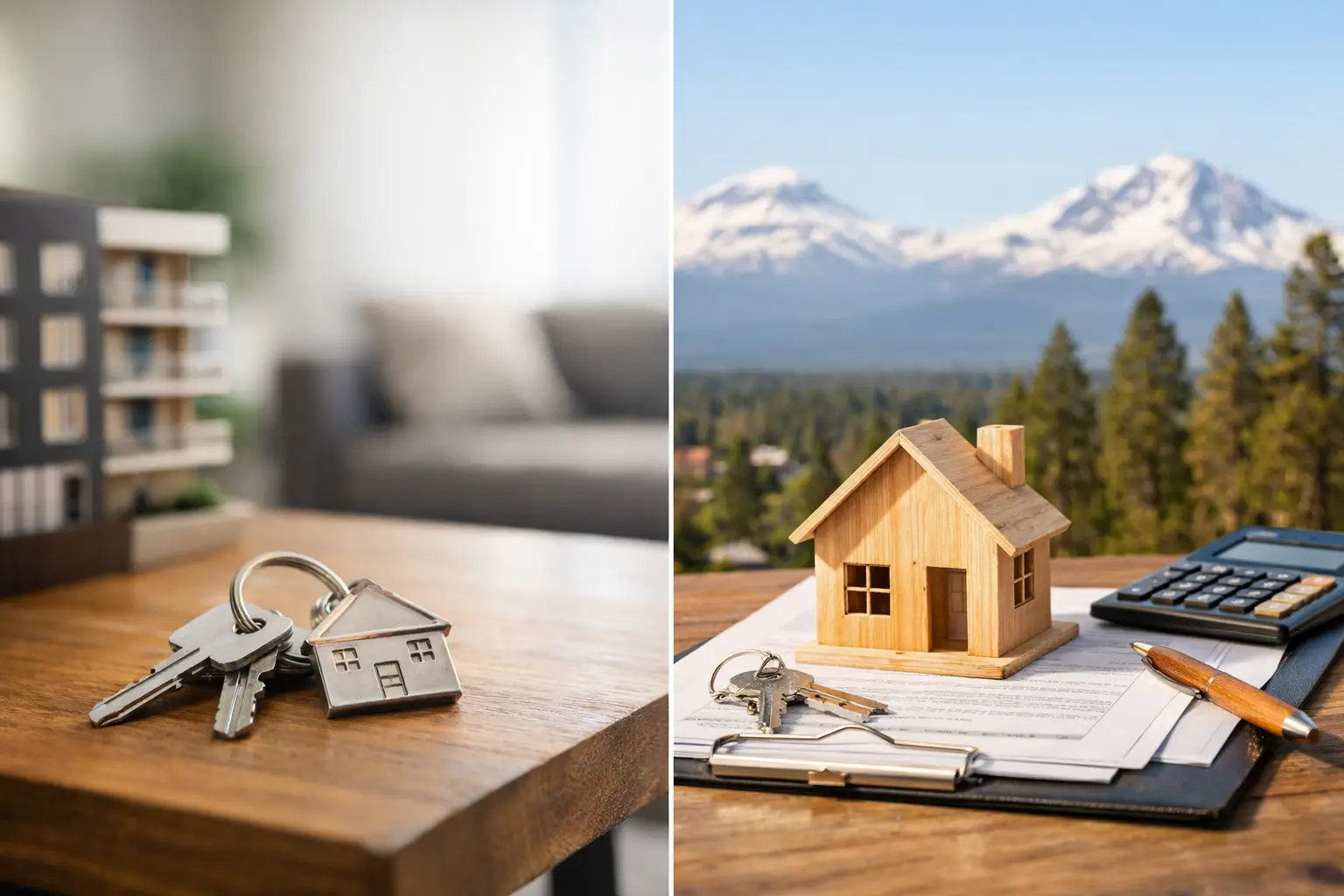
If you’re comparing renting vs buying in Bend, you’re probably already feeling the tension that makes this decision harder here than in a lot of other markets. Rent can be high. Home prices can be high. Inventory shifts. Interest rates matter. And lifestyle plays a bigger role in Central Oregon than people expect when they’re making this choice from out of town.
The right answer is not always the one that looks best on a spreadsheet. In Bend, where neighborhoods can feel very different from one another and long-term goals vary so much between newcomers, retirees, young families, and investors, the better question is often this: what sets you up well for the next three to seven years?
Renting vs buying in Bend starts with your timeline
Timeline is usually the clearest dividing line.
If you’re moving to Bend for a job, a lifestyle change, or a fresh start but you are still learning the area, renting can be the smarter move. It gives you time to understand the rhythm of different parts of town, from west side convenience to east side value to the feel of nearby communities like Redmond. A lease can buy you breathing room while you get familiar with commute patterns, school options, trail access, and the everyday details that don’t show up in listing photos.
Buying tends to make more sense when you’re planning to stay put for a while. Closing costs, loan fees, moving expenses, and the normal costs of homeownership can take time to recover. If you expect to be in the home for only a year or two, renting often wins on flexibility alone. If you’re thinking more in the range of five years or longer, buying usually deserves a serious look.
This is especially true in a market like Bend, where lifestyle fit matters so much. A home purchase works best when you know not just that you want to live in Central Oregon, but how you want to live here.
The monthly payment is only part of the picture
A lot of people begin with a rent payment versus a mortgage payment. That’s reasonable, but it is not enough.
When you buy, your monthly housing cost includes more than principal and interest. You’ll also need to account for property taxes, insurance, maintenance, utilities, and depending on the property, HOA dues. If you’re buying a condo or townhome, monthly dues may cover some exterior expenses, but they still affect your real monthly number.
Renting is simpler. Your upfront costs are usually lighter, and your maintenance surprises are limited. If the water heater goes out, that’s generally not your bill. That predictability matters, especially for first-time movers or buyers who want to keep cash available for other goals.
But buying has a long-game advantage that renters do not get. Part of each mortgage payment may build equity. If values rise over time, ownership can also create appreciation. Those benefits are not guaranteed on a schedule, and markets do move in cycles, but for many households, owning becomes a way to build wealth while meeting a basic need.
The practical question is not whether buying is always better. It is whether buying leaves you financially stable after the mortgage is paid each month. If the payment stretches you too far, the pride of ownership can wear off quickly.
Buying in Bend can be a lifestyle choice as much as a financial one
People relocating here often focus on housing numbers first, then realize later that their real decision is about control, routine, and belonging.
Owning gives you a stronger sense of permanence. You can settle into a neighborhood, customize the space, plant roots, and make decisions without wondering whether a lease will renew. For families, that stability can be a major reason to buy. For retirees, it can mean finding the right single-level layout or low-maintenance property and getting comfortable for the long run. For remote workers, it may mean designing a home office and finally having space that actually fits daily life.
Renting has its own lifestyle advantages. It can let you test Bend without overcommitting. If you’re coming from California, Washington, or Idaho and you know you want Central Oregon but are not yet sure whether Bend proper, Redmond, or another pocket of Deschutes County fits best, renting first can be a wise move. The same goes for buyers who think they want one type of property, then discover after six months that they want something different.
There is no shame in renting while you learn the market. In fact, that can be the more disciplined choice.
When renting makes more sense in Bend
Renting is often the better path if you need flexibility, if your job situation may change, or if you are still rebuilding savings after a move. It also makes sense if you want to wait for a stronger down payment, improve your credit profile, or watch interest rates for a while before stepping into ownership.
For some households, renting also creates a cleaner transition. Instead of rushing to buy from out of state and hoping the neighborhood feels right, you can rent, explore the area, and buy with better local perspective. That approach can save money and stress, even if it delays a purchase.
Renting can also be smart when your alternatives on the purchase side involve major compromise. If the only homes in your budget need more work, are in locations that do not fit your routine, or would push your monthly payment uncomfortably high, renting for another year may put you in a stronger position.
When buying in Bend makes more sense
Buying tends to stand out when you have stable income, a realistic budget, enough cash reserves, and a clear sense of where and how you want to live. That does not mean you need perfect timing. It means you need enough confidence that the home supports your life instead of complicating it.
In Bend, ownership can be especially appealing for buyers who are tired of rising rent, want more privacy, need room to grow, or see themselves staying in the region long term. It can also be a strong option for buyers who understand the local inventory well enough to spot value in certain neighborhoods, home styles, or nearby communities.
Some buyers also benefit from acting sooner rather than later. If home prices continue moving upward while you wait, saving for the same type of home can become harder, not easier. On the other hand, buying before you are financially ready is rarely the win people hope for. The best purchase is one you can comfortably hold.
Renting vs buying in Bend for relocation buyers
Relocation buyers face a different version of the same question because so much depends on what they do not know yet.
A buyer coming from a denser metro area may think a 20-minute drive is a lot, then arrive here and realize it opens up plenty of options. Another may assume they want a newer home, then fall in love with a different part of town entirely. Schools, traffic flow, daily errands, and access to the activities you care about can all shift your priorities once you’re on the ground.
That is why local guidance matters. Listing data can tell you price per square foot. It cannot tell you how a neighborhood lives day to day or whether a home’s location matches the routine you actually want. For many relocation clients, that insight is the difference between buying confidently and buying too fast.
The best decision is usually the one that keeps your options open
The strongest move is not always to buy immediately, and it is not always to wait. It is to make a housing choice that protects your finances, fits your season of life, and leaves room for smart next steps.
If renting gives you the time to learn Bend, strengthen your position, and buy with clarity later, that is a good decision. If buying now puts you into a home and neighborhood that fit your plans for years to come, that can be a very good decision too.
Around here, the right move usually comes down to more than market headlines. It comes down to how long you plan to stay, how you want to live, and whether the numbers work without strain. If you can answer those three things honestly, the path tends to get a lot clearer.
And if it still feels close, that is normal. In a market like Bend, good decisions are rarely rushed. They are made with local perspective, realistic math, and enough patience to get the fit right.