
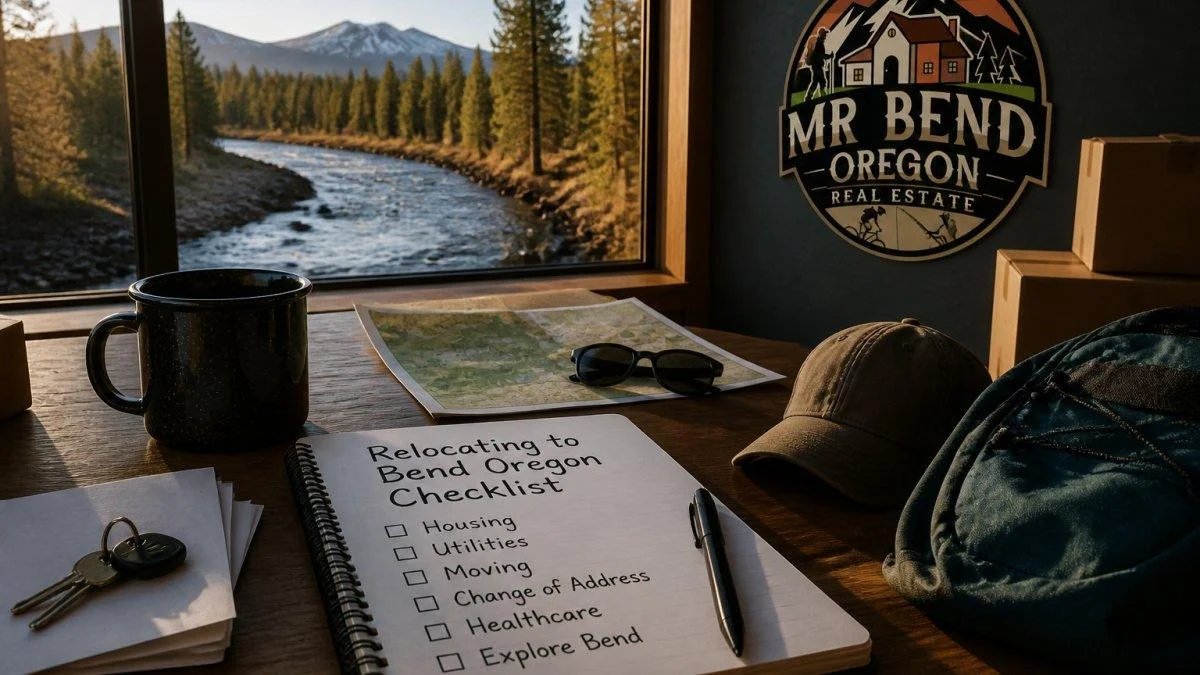
Table of Contents
- Why a Bend Oregon Checklist Beats a Generic Moving Plan
- Start With a Relocation Timeline, Not a To-Do List
- Budgeting for the Cost of Living in the High Desert
- Reading the Bend Housing Market Before You Make an Offer
- Finding the Best Neighborhoods for Families in Bend and Redmond
- Employment, Remote Work, and Commute Realities
- Legal and Administrative Tasks: Driver License, Voter Registration, and Local Ordinances
- Utility Setup Guide for New Residents
- Tax Residency and Remote Worker Tax Implications in Oregon
- Moving Logistics: Pets, Vehicles, and the Stuff You Own
- High Desert Climate and Your First Winter: A Seasonal Transition Guide
- Outdoor Recreation and Lifestyle Adjustment to Mountain Town Living
- Community Integration: How to Actually Meet People After the Move
- Your Bend Oregon Checklist: The Final Week Before the Truck Arrives
- Frequently Asked Questions
Last Updated: October 2, 2026
Why a Bend Oregon Checklist Beats a Generic Moving Plan
A relocating to Bend Oregon checklist works differently from a standard moving plan because it has to account for a high desert climate, a tight housing market, and a lifestyle shift that catches many newcomers off guard. This guide from I Sell Bend Oregon covers the timeline, the budget, the paperwork, and the small details that generic checklists skip.
Bend sits at roughly 3,600 feet in Central Oregon, where the high desert climate swings from dry, sunny summers to real snowpack in winter.
The 90-day countdown we outline below, plus the budget and neighborhood sections, has helped many families make the move without scrambling at the last minute. But first, here’s what most guides get wrong: they treat Bend like any other mid-size city.
Start With a Relocation Timeline, Not a To-Do List
A relocation timeline beats a to-do list because it sequences tasks by dependency, not by urgency. You cannot transfer a driver license before you have a local address, and you cannot get a local address before your offer closes. Order matters more than hustle.
The 90-Day Countdown: What to Do Each Month
Months 3 to 2 out: Research neighborhoods, confirm your remote work or job situation, and get pre-approved for financing.
Months 2 to 1 out: Make your offer, schedule inspections, and line up movers or a truck rental.
Final month: Transfer utilities, schedule your driver license appointment, register to vote, and confirm your pet’s health certificate if you’re flying or crossing state lines.
| Phase | Timing | Core Tasks |
|---|---|---|
| Research | 90-60 days out | Neighborhood scouting, financing pre-approval, job or remote work confirmation |
| Commit | 60-30 days out | Offer and inspection, movers booked, school district research |
| Execute | 30-0 days out | Utility setup, license transfer, voter registration, pet paperwork |
Pro Tip
Book your moving truck or crew at least six weeks ahead if you’re moving in summer. Bend’s peak season runs June through September, and availability tightens fast.
Book your moving truck or crew at least six weeks ahead if you’re moving in summer. Bend’s peak season runs June through September, and availability tightens fast.
Budgeting for the Cost of Living in the High Desert
The cost of living in the high desert runs above the national average, mostly because housing and heating drive the numbers. Budgeting well means separating one-time moving costs from recurring monthly expenses before you sign anything.
Where the Money Actually Goes Each Month
Housing is the largest line item by far, followed by utilities, which spike in winter when temperatures drop into the teens and twenties. Gas and groceries land close to national averages, but heating, snow removal, and vehicle maintenance run higher than most newcomers expect.
- Housing: mortgage or rent, property taxes, and homeowners insurance
- Utilities: electricity, natural gas or propane, water, and internet
- Transportation: fuel, winter tires, and occasional four-wheel-drive maintenance
- Seasonal: snow removal, firewood if you heat with wood, and summer irrigation
A common mistake is underestimating the seasonal swing. A monthly budget that works in July can feel tight in January, so build a winter buffer into your plan from day one.
Reading the Bend Housing Market Before You Make an Offer
The Bend housing market rewards buyers who understand inventory cycles rather than those who react to a single listing. Inventory typically loosens in late fall and winter, while spring and summer bring more competition and faster sales.
Median home prices in Deschutes County sit well above the national median, and rental availability stays tight, particularly for pet-friendly units. That combination means you should have financing fully underwritten before you tour homes, not just pre-qualified.
What most guides miss is how much commute times and traffic patterns vary block by block. A home five minutes from downtown can feel twenty minutes away in summer tourist traffic.
Watch Out
Waiving inspection to win a bidding war is the single most expensive mistake we see. Foundation, roof, and heating issues in a high desert climate can run into five figures to fix.
Waiving inspection to win a bidding war is the single most expensive mistake we see. Foundation, roof, and heating issues in a high desert climate can run into five figures to fix.
Finding the Best Neighborhoods for Families in Bend and Redmond
The best neighborhoods for families depend on three factors: school district boundaries, commute times, and access to outdoor recreation. Bend’s westside offers proximity to trails and downtown; the eastside and Redmond lean more suburban with larger lots and newer construction. But the differences that actually matter for a family are finer-grained than that, and most relocation guides skip them.
Westside Bend: Character, Trees, and Trail Access
The westside covers older, tree-lined neighborhoods near downtown and the river corridor, plus newer pockets climbing toward the foothills. Lots tend to be smaller, homes older, and prices higher. The trade-off is walkability, mature landscaping, and trail access from many streets. If you work remotely and value being on foot or bike, this is the zone most buyers ask about first.
Eastside Bend: Newer Construction and Bigger Lots
The eastside has absorbed most of the region’s recent residential growth, which means newer floor plans, larger lots, and more inventory in a given price band. Commutes to the medical district and the airport are shorter from here. The trade-off is less shade, more wind exposure on open lots, and a longer drive to westside trailheads.
Redmond: Value, Space, and a Different Commute Math
Redmond sits roughly 20 to 30 minutes north of Bend depending on where you start and end, and it typically offers more square footage per dollar. Families who work in Redmond or who only commute to Bend a few days a week often find the math works. Daily commuters should drive the route at their actual departure time before committing, because the parkway can back up in winter and during summer tourist season.
School Boundaries: Verify the Address, Not the Neighborhood Name
School districts in Bend and Redmond both maintain strong reputations, but attendance boundaries matter more than neighborhood reputation. Two homes on the same street can feed into different elementary schools, and boundaries occasionally shift as growth continues. Before you make an offer, confirm which specific school an address feeds into using the district’s own boundary lookup tool, not a listing site’s school widget.
Commute Times Vary Block by Block
What most guides miss is how much commute times and traffic patterns vary block by block. A home five minutes from downtown can feel twenty minutes away in summer tourist traffic. Drive your route at the actual time you’d commute, in both directions, before you commit. If you’re weighing two neighborhoods, do the drive on a weekday morning and a Friday afternoon.
Tour at Different Times of Day
Neighborhood demographics shift noticeably between areas, so tour at different times of day. Some streets fill with families in the afternoon; others stay quiet until the weekend. Walk the block in the evening and on a weekend morning before you decide.
If you want a local walkthrough rather than a listing page, our neighborhood tours on the Mr. Bend Oregon real estate YouTube channel cover the feel of each area street by street.
Pro Tip
Ask about snow plow priority and sun exposure before you fall in love with a lot. North-facing driveways and streets low on the plow route stay icy longer, and that shapes daily life from November through March.
Ask about snow plow priority and sun exposure before you fall in love with a lot. North-facing driveways and streets low on the plow route stay icy longer, and that shapes daily life from November through March.
Employment, Remote Work, and Commute Realities
Employment opportunities cluster around healthcare, tourism, outdoor retail, education, and professional services. If you’re relocating for a local job, confirm your commute in person. Public transportation exists but is limited compared to larger metros, so most residents drive.
For remote workers, test your internet options by address. Some rural and foothill properties rely on satellite or fixed wireless, which may not support video calls or large file transfers.
Legal and Administrative Tasks: Driver License, Voter Registration, and Local Ordinances
Administrative tasks are where a Bend Oregon checklist earns its keep, because Oregon rules differ from many other states in ways that catch newcomers off guard. You’ll need to transfer your driver license, register your vehicle, update your voter registration, and review local ordinances that vary by city and county. Here’s how each one actually works.
Driver License: What to Bring and Why It Matters
New residents apply for an Oregon driver license at a local DMV office. Oregon participates in Real ID, so if you want a compliant credential you’ll need to bring proof of identity, proof of lawful status, proof of Social Security number, and two documents proving your new address.
If you hold a commercial driver license or endorsements, the process is different and worth confirming with the DMV before you move, since some endorsements require additional testing.
Vehicle Registration and Emissions Testing
Oregon requires new residents to register their vehicles, and the Bend area falls within the DEQ emissions testing boundary. That means most vehicles registered at a Bend-area address need to pass an emissions test before or during registration.
You’ll also need to decide whether to keep your out-of-state plates during the transition. Most new residents have a limited window to complete registration after establishing residency, so don’t let this slide, driving on expired out-of-state plates is an expensive way to start a new chapter.
Voter Registration
Voter registration in Oregon can be completed online, by mail, or at a DMV office when you get your license. Your registration is tied to your residential address, and you’ll want to update it before the next election cycle. If you’re moving from a state with different party registration rules, note that Oregon’s process works differently and you may need to re-select a party affiliation.
Local Ordinances: Bend, Redmond, and Unincorporated County
Local ordinances on things like fence height, accessory dwelling units, short-term rentals, parking, and noise vary between Bend, Redmond, and unincorporated Deschutes County. A property just outside city limits may follow county rules instead of city rules, which changes what you can build, park, or rent. If you plan to add an ADU, run a short-term rental, or keep chickens or other animals, verify the rules for that specific address before you close, not after.
The Administrative Checklist
- Transfer your out-of-state driver license at a local DMV office (bring Real ID documentation)
- Complete DEQ emissions testing if your vehicle requires it, then register your vehicle
- Update your voter registration with your new address
- Review city and county ordinances on short-term rentals, parking, ADUs, and pets
- Update your address with banks, insurers, and the postal service
- Confirm whether your property is inside city limits or in unincorporated county
Check the Oregon DMV official guidance on new resident licensing for current requirements and appointment availability, since rules and wait times change. The Oregon DEQ vehicle inspection program lists current emissions testing requirements and exemptions.
Watch Out
Don’t assume your out-of-state registration, plates, or license will carry you through the first few months. Oregon’s timelines are shorter than many movers expect, and the penalties for missing them add up quickly.
Don’t assume your out-of-state registration, plates, or license will carry you through the first few months. Oregon’s timelines are shorter than many movers expect, and the penalties for missing them add up quickly.
Utility Setup Guide for New Residents
Utility setup is easiest when you start it two to three weeks before your move-in date. Most providers need a service address, a start date, and a deposit or credit check.
- Electricity: schedule activation for your move-in day
- Natural gas or propane: confirm whether the property connects to a gas line or uses a tank
- Water and sewer: often handled by the city or a local district
- Internet: book installation early; appointments fill quickly in peak season
- Trash and recycling: set up curbside service through your city or a private hauler
Key Takeaway
Book internet installation the moment you have a closing date. In busy months, installation windows can stretch a week or more past your move-in.
Book internet installation the moment you have a closing date. In busy months, installation windows can stretch a week or more past your move-in.
Tax Residency and Remote Worker Tax Implications in Oregon
Tax residency is one of the most overlooked items on any relocation checklist, and remote workers need to plan for it carefully.
If you’re moving from a state with no income tax, expect a change in your take-home pay.
Talk to a licensed tax professional about your specific situation. The Oregon Department of Revenue guidance on residency explains how the state determines residency status.
Moving Logistics: Pets, Vehicles, and the Stuff You Own
Moving logistics in a mountain town involve three things people routinely underestimate: pets, vehicles, and the volume of stuff they own.
Pet-friendly relocation takes planning. Confirm your new home’s pet policy, locate a veterinarian before you arrive, and keep vaccination records handy.
For vehicles, winter-rated tires matter here. If your car is two-wheel drive, plan for snow tires or a second vehicle that handles snow.
High Desert Climate and Your First Winter: A Seasonal Transition Guide
Your first winter in the high desert is the adjustment that surprises newcomers most. Snow, ice, and dry cold air demand preparation that a mild-climate move never required.
Winter preparation starts in fall:
- Schedule a furnace or heating system inspection
- Buy snow tires or all-weather tires rated for winter
- Stock a snow shovel, ice melt, and a windshield scraper
- Insulate exposed pipes and learn where your water shutoff is
- Keep an emergency kit in your car with blankets and a flashlight
Emergency preparedness matters here because mountain passes can close and storms can knock out power. A little planning in October saves a lot of stress in January.
Outdoor Recreation and Lifestyle Adjustment to Mountain Town Living
Outdoor recreation is the reason many people move here, and it’s also the fastest way to feel at home.
Lifestyle adjustment to mountain town living means accepting a slower pace, seasonal crowds, and fewer big-box conveniences than a large metro.
Seasonal activities shift through the year: hiking and river floats in summer, mountain biking and fly fishing in fall, skiing and snowshoeing in winter, and wildflower walks in spring.
Community Integration: How to Actually Meet People After the Move
Community integration rarely happens by accident, and it’s the part of the move most checklists ignore entirely. The people who settle in fastest are the ones who show up somewhere regularly.
- Join a club or league tied to an activity you already enjoy
- Volunteer with a local trail, river, or community group
- Attend neighborhood association meetings
- Take a class at a community college or recreation center
- Say yes to the first three invitations, even the small ones
What most guides miss is that community culture here rewards participation over networking. People connect through shared activity, not through business cards.
If you’re still choosing an area, our relocation guide from I Sell Bend Oregon walks through neighborhoods and lifestyle fit.
Your Bend Oregon Checklist: The Final Week Before the Truck Arrives
The final week is about confirmation, not new tasks. Confirm your movers, your utility start dates, your closing date, and your pet and vehicle paperwork.
Walk through the empty home before closing and test the furnace, water heater, and every faucet. Note anything that needs attention while the seller is still responsible.
Then hand the keys to a local team that knows this market. At I Sell Bend Oregon, we’ve spent over 30 years helping buyers and sellers navigate Deschutes County, backed by our eXp Realty affiliation and a family-led approach. We offer deep neighborhood knowledge, relocation support, and personalized guidance for out-of-state movers.
Start your search with I Sell Bend Oregon and make your move to Central Oregon a smooth one.
Frequently Asked Questions
Why are people moving out of Bend, Oregon?
Most moves out of Bend trace back to housing costs rather than the town itself. When the median home price climbed faster than local wages, some long-time residents sold and relocated to nearby communities or out of state. Others leave for job changes or to be closer to family. That churn is normal for a desirable mountain town, and it also means buyers who plan carefully can still find the right fit in Bend or Redmond.
Is Bend, Oregon a good place to move to?
It depends on what you want from daily life. Bend delivers outdoor recreation, a walkable downtown, healthcare access, and a mild high desert climate with four real seasons. The tradeoffs are housing costs, limited rental availability, and wages that lag behind some larger metros. If you can line up remote work or a local job before you arrive, the lifestyle math usually works in your favor.
What are the first steps on a relocating to Bend Oregon checklist?
Start with three things in your first month: set a realistic relocation timeline, get pre-approved with a lender who understands Deschutes County lending, and research neighborhoods against your commute and school priorities. From there, build your budgeting around the cost of living in the high desert, then layer in utility setup, driver license transfer, and voter registration as your move date gets closer. A written checklist keeps the sequence from tripping you up.
What should I know about the local climate before moving?
Bend sits in a high desert, so expect dry summers with wide day-to-night temperature swings and cold, snowy winters. Winter preparation matters more than most newcomers expect: snow tires or all-wheel drive, a snow shovel, and a plan for driveway clearing. Wildfire smoke can affect late summer air quality, so an emergency preparedness kit and a good air filter are worth having on hand before your first season.
How does the cost of living in the high desert compare to other areas?
Housing is the biggest line item and usually the deciding factor. Median home prices in Bend run above many comparably sized cities, while groceries, utilities, and healthcare land closer to national averages. Property taxes vary by location and assessed value, so check the specific parcel rather than a county-wide figure. Renters face tight rental availability, especially for pet-friendly units, so start your search earlier than you would in a larger market.
What utility and service setup tasks belong on my checklist?
Set up electricity, natural gas if the home uses it, water and sewer through the local provider, internet, and trash and recycling service. Schedule activation dates for the day after you close or the day you take possession so you are not without power or water. Confirm whether the property has a septic system instead of city sewer, since that changes your maintenance responsibilities. Keep a folder of account numbers and meter readings from move-in day.
Are there specific neighborhood considerations for families moving to the area?
Look at school district boundaries first, since they change by street in some parts of Bend and Redmond. Then layer in commute times, park access, and whether the street has sidewalks or trails. Families often weigh proximity to schools and healthcare access against lot size and price. Touring neighborhoods in person, ideally on a weekday when traffic patterns are real, tells you more than any listing photo.
How can I connect with the local community after arriving?
Sign up for a recreation program, join a trail or cycling group, or volunteer with a local event. Bend’s community culture revolves around outdoor recreation and small local gatherings, so showing up consistently at one or two activities beats scattering across ten. Introduce yourself to neighbors, attend a farmers market, and follow local news. Within a few months, the town starts to feel smaller than the map suggests.
Relocating to a mountain town involves more moving parts than a standard move, from winter preparation to tax residency. I Sell Bend Oregon handles the real estate side so you can focus on everything else, with over 30 years of local experience, relocation guidance for out-of-state buyers, and neighborhood tours that show you how each area actually feels. Start your search with I Sell Bend Oregon and find the Central Oregon home that fits your life.