
Table of Contents
- Step 1: Inspect and Service Your Heating System
- Step 2: Improve Insulation and Reduce Heat Loss
- Step 3: Seal Drafts Around Doors and Windows
- Step 4: Protect Pipes from Freezing
- Step 5: Clear Snow and Ice from Driveways and Walkways
- Winter Home Maintenance Checklist Before Listing
- How to Improve Curb Appeal in Winter Months
- Winter Home Staging Tips for Showings
- Winter Real Estate Photography Tips for Your Listing
- Managing Showings in Cold and Snowy Conditions
- Frequently Asked Questions
Last Updated: October 10, 2026
Step 1: Inspect and Service Your Heating System
To prepare home winter sale, your heating system is critical during winter showings. A home that feels cold will lose buyers immediately, no matter how beautiful it looks. Start by having a professional inspect and service your furnace or heating system before you list.
A well-maintained system tells buyers the home has been cared for. It also prevents the risk of a system failure during showings. Schedule this inspection early in the season. Most HVAC technicians get busy in late fall, so book ahead.
During the inspection, ask the technician to:
- Clean or replace the furnace filter
- Check the thermostat for accuracy
- Inspect all ductwork for leaks
- Test the system under full load
- Document everything in writing
Keep all service records. These documents reassure buyers that the heating system is reliable. When potential buyers see proof of regular maintenance, they feel confident in their purchase.
Pro Tip
Set your thermostat to 68-70 degrees during all showings. A warm home feels inviting and shows off the space better than a cold one. Buyers will linger longer and imagine themselves living there.
Set your thermostat to 68-70 degrees during all showings. A warm home feels inviting and shows off the space better than a cold one. Buyers will linger longer and imagine themselves living there.
Step 2: Improve Insulation and Reduce Heat Loss
Heat loss is one of the biggest concerns for winter home buyers. They want to know the home will be energy-efficient and comfortable. Improving insulation before you list makes your home more attractive and can justify a higher asking price.
Start in the attic. Most homes lose significant heat through the roof. Check your attic insulation depth. If it’s less than 6 inches, adding more insulation is a smart investment. You don’t need to insulate the entire attic, focus on the main living areas above.
Basement and crawl space insulation matters too. Cold basements signal poor energy efficiency to buyers. Inspect pipes in these areas for adequate insulation as well.
Key areas to address:
- Attic insulation (target R-38 to R-60 depending on your climate zone)
- Basement rim joists and band boards
- Crawl space walls and rim joists
- Pipe insulation in unheated spaces
When you prepare home winter sale in Bend, energy efficiency becomes a major selling point. Buyers will ask about utility bills. Having improved insulation gives you honest answers and competitive advantage.
Step 3: Seal Drafts Around Doors and Windows
Drafts are one of the first things buyers notice in winter. Cold air leaking around doors and windows makes a space feel uncomfortable and wasteful. Sealing drafts takes time but requires minimal investment.
Inspect all exterior doors and windows for gaps. Use weatherstripping or caulk to seal any openings. Replace worn-out weatherstripping around entry doors. This simple fix makes a dramatic difference in how a home feels during a showing.
Check these common draft points:
- Door frames and door sweeps
- Window frames and sashes
- Basement windows
- Attic access panels
- Electrical outlets on exterior walls
For doors, install or replace door sweeps at the bottom. These prevent cold air from entering under the door. For windows, apply removable caulk or weatherstripping that won’t damage the frame.
Watch Out
Do not use permanent caulk on windows unless you’re certain the buyer won’t want to replace them later. Removable weatherstripping is better for winter showings because it’s temporary and doesn’t commit the home to a particular look.
Do not use permanent caulk on windows unless you’re certain the buyer won’t want to replace them later. Removable weatherstripping is better for winter showings because it’s temporary and doesn’t commit the home to a particular look.
Step 4: Protect Pipes from Freezing
Frozen pipes are a nightmare for any homeowner. Buyers worry about this risk in winter. Show them you’ve taken steps to prevent it.
Insulate exposed pipes in basements, crawl spaces, and attics. Pipe insulation is inexpensive and easy to install. Wrap pipes with foam sleeves or heat tape. Pay special attention to pipes near exterior walls or in unheated spaces.
If you have a vacation property or the home will sit empty during winter, this becomes even more critical. Buyers will ask about winterization procedures. Document everything you’ve done.
Steps to protect pipes:
- Wrap exposed pipes with foam insulation sleeves
- Install heat tape on vulnerable sections
- Keep cabinet doors under sinks open to allow warm air circulation
- Maintain a minimum indoor temperature of 55 degrees, even when the home is vacant
- Ensure gutters and downspouts drain away from the foundation
When you prepare your home for sale in Bend during winter, pipe protection is a practical concern that directly affects buyer confidence. Include photos of your winterization efforts in your listing materials.
Step 5: Clear Snow and Ice from Driveways and Walkways
Safety is a top priority for winter showings. A slippery driveway or icy walkway creates liability and makes buyers nervous. Clear all snow and ice before every showing.
Start early in the morning on showing days. Fresh snow or ice overnight can ruin your preparation. Have a snow removal plan in place. This might mean hiring a service or being ready to shovel yourself.
Create safe pathways:
- Clear the entire driveway from street to garage
- Salt or sand walkways to the front door
- Remove ice from steps and porches
- Clear a path to any side entrances
- Ensure the mailbox area is accessible
Use ice melt products carefully. Some damage concrete or harm pets. Choose products that are safe for the environment and won’t stain the driveway. Apply salt or sand after shoveling, not before, for better effectiveness.
Key Takeaway
Buyers arriving for a showing will judge your home the moment they pull into the driveway. A clear, safe pathway sets a positive tone before they even enter the house.
Buyers arriving for a showing will judge your home the moment they pull into the driveway. A clear, safe pathway sets a positive tone before they even enter the house.
Winter Home Maintenance Checklist Before Listing
Use this checklist to ensure you’ve covered all critical winter preparation tasks before you list your home.
| Task | Timing | Priority |
|---|---|---|
| Service heating system | 4-6 weeks before listing | High |
| Inspect and improve attic insulation | 4-6 weeks before listing | High |
| Seal drafts around doors and windows | 2-4 weeks before listing | High |
| Insulate exposed pipes | 2-4 weeks before listing | High |
| Clear gutters and downspouts | Before first snow | High |
| Test all exterior lighting | 2 weeks before listing | Medium |
| Inspect roof for damage or ice dams | Before winter | Medium |
| Winterize outdoor faucets | Before first freeze | Medium |
| Stock ice melt and snow removal tools | Before first snow | Medium |
| Document all maintenance work | Ongoing | Medium |
Print this checklist and check off each item as you complete it. Having a written record shows buyers and their inspectors that you’ve been proactive about winter maintenance.
How to Improve Curb Appeal in Winter Months
Winter curb appeal is different from summer curb appeal. Snow and bare trees change how a home looks. Focus on what you can control: lighting, pathways, and evergreen landscaping.
Outdoor lighting becomes crucial in winter. Days are shorter and showings often happen in darkness. Install uplighting on trees or accent lighting on the front of the home. Warm white lights create an inviting atmosphere. Path lights along the walkway guide buyers safely to the door.
Evergreen plants are your winter landscaping allies. They provide color and structure when deciduous trees are bare. Add winter planters with evergreens, ornamental grasses, or winter berries near the entrance. These small touches show that the home is well-maintained even in harsh seasons.
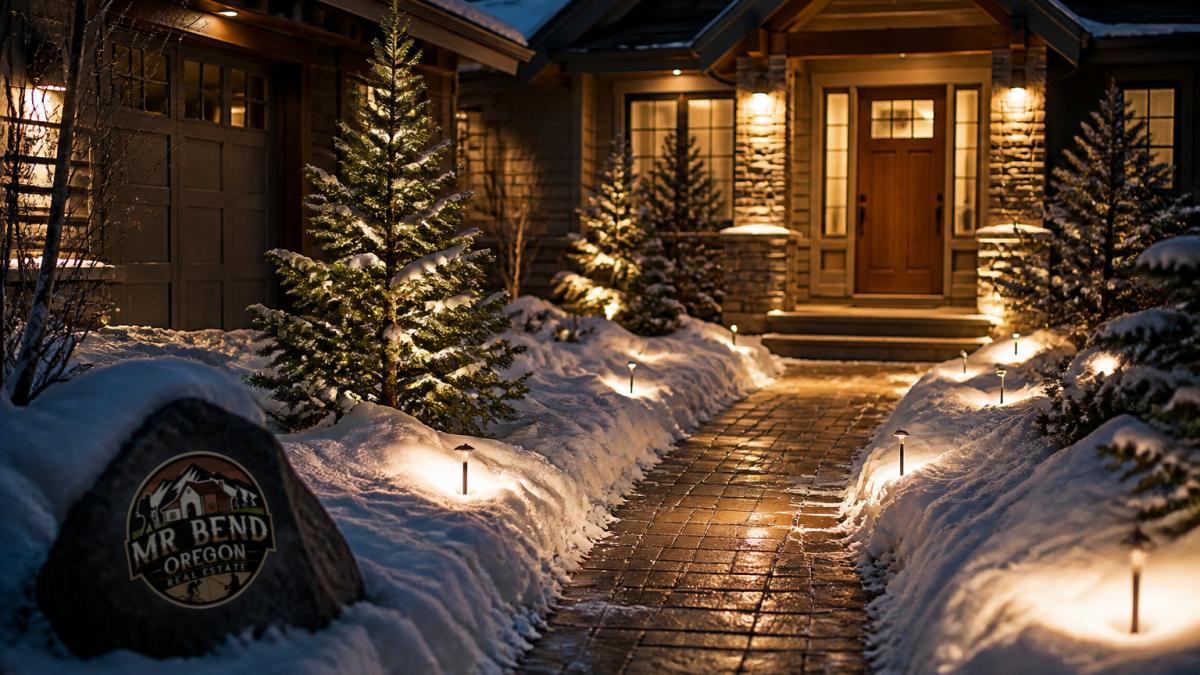
Keep the front entrance pristine:
- Clear snow and ice immediately
- Add a fresh wreath or winter décor
- Ensure house numbers are visible and clean
- Power wash the front door if it’s not too cold
- Trim any dead branches from visible trees
When you prepare your home for sale in Bend during winter, curb appeal matters more than ever. Buyers are making decisions in difficult conditions. Make their first impression count.
Winter Home Staging Tips for Showings
Staging a home in winter requires different tactics than summer staging. Cold weather means buyers are thinking about comfort, warmth, and coziness. Use this to your advantage.
Create a warm, inviting atmosphere inside. Have a subtle scent like vanilla or cinnamon in the home during showings. Keep the temperature at 68-70 degrees. Buyers should feel welcomed, not chilled.
Lighting is critical. Winter days are dark. Turn on all interior lights during showings, even during the day. This brightens the space and makes it feel larger. Use warm white bulbs, not harsh cool white ones.
Staging strategies for winter:
- Light a fireplace if you have one (or use a faux log insert)
- Add warm-colored throw blankets to sofas
- Use warm lighting throughout
- Minimize clutter so the space feels open
- Remove heavy winter coats from closets
- Keep bathrooms bright and clean
- Stage bedrooms with warm bedding
- Highlight any heated features like radiant floors
Remove winter gear from visible areas. Coats, boots, and snow equipment make a home feel cluttered. Store these items in a garage or closet before showings. Buyers want to imagine themselves living in a clean, organized space.
Pro Tip
If you have a fireplace, use it during showings. A real fire (or even a faux log insert) creates warmth and ambiance that buyers find irresistible in winter.
If you have a fireplace, use it during showings. A real fire (or even a faux log insert) creates warmth and ambiance that buyers find irresistible in winter.
Winter Real Estate Photography Tips for Your Listing
Winter photography in Bend presents a distinct challenge: how to showcase your home authentically when snow covers the landscape and deciduous trees are bare. The temptation is to hide winter entirely, but buyers viewing your listing in January know it’s winter. Instead, photograph your home in a way that builds confidence in its winter performance and maintenance.
Photograph on clear days, not during snow. Fresh snow looks beautiful but obscures architectural details, roof condition, and the actual color of siding and trim. Wait 24-48 hours after snow falls for the best light and clarity. If your driveway and walkways are cleared and salted, that’s a selling point, photograph it. Buyers want to see that the home is actively maintained in winter conditions.
Show winter landscaping honestly. Bare deciduous trees and dormant shrubs are normal in winter. Do not angle shots to hide them or wait for spring to list. Instead, photograph evergreen plantings, winter planters, and uplighting that frame the entrance. These elements prove the home has year-round curb appeal. If you’ve added winter décor (wreaths, lights, planters), photograph those too, they show buyers what the home can look like during the season.
Capture the heating and comfort story. Interior winter photos should emphasize warmth and light. Photograph the fireplace lit or with a faux log insert glowing. Show warm-toned lighting throughout the home. Photograph windows with frost or snow visible outside, then the warm interior, this visual contrast tells the story of insulation and comfort that winter buyers care about. Photograph the thermostat set to a comfortable temperature, or a close-up of recently serviced HVAC equipment if it’s visually clean and accessible.
Time your shoot for winter light. The sun is lower in the sky in winter, creating dramatic shadows and warm golden light in early morning or late afternoon. This is an advantage, not a limitation. Use this light to highlight the front entrance, driveway, and landscaping. Exterior photos taken during golden hour in winter often look warmer and more inviting than summer shots taken in harsh midday sun.
Photograph proof of winterization. Include photos of insulated pipes in the basement or crawl space, sealed weatherstripping around doors, or a clear gutter system. These images reassure buyers that you’ve invested in winter readiness. If you have service records for your heating system or recent roof inspection, photograph those documents or include them in your listing materials. Documentation builds buyer confidence more than words alone.
Avoid misleading seasonal staging. Do not photograph your home with summer landscaping in the background, or stage it with summer décor to hide winter. Buyers will visit in winter and feel deceived. Instead, stage for winter comfort: warm lighting, a lit fireplace, cozy textiles, and clear sightlines. This staging is honest and aligns with what buyers will actually experience.
Use wide-angle lenses indoors and show scale. Winter interiors can feel smaller if lighting is poor. Photograph rooms with all lights on, using wide-angle lenses to show space and flow. Include photos of rooms from multiple angles so buyers understand layout and size. Photograph hallways and transitions to show how the home flows.
Highlight any seasonal advantages. If your home has a south-facing window that brings in winter sun, photograph that light filling a room. If you have radiant floor heating, photograph it in use. If your roof is clear of ice dams or snow buildup (a sign of good insulation), photograph that too. These details matter to winter buyers.
When you prepare your home for sale in Bend during winter, professional photography is an investment that pays off. An experienced photographer understands how to work with winter light and how to present a home honestly during the season when it’s being shown. They know how to photograph snow and bare trees without making the home look neglected, and how to emphasize the systems and features that keep a home warm and comfortable when temperatures drop.
Managing Showings in Cold and Snowy Conditions
Winter showings require more coordination than summer ones. Snow, ice, and cold create logistical challenges that can damage your home’s presentation if you’re not prepared. The key is planning ahead and staying flexible.
Coordinate showing timing with weather. Work with your real estate agent to avoid scheduling showings during active snowfall or immediately after. If snow is forecast, ask your agent to schedule showings before the storm arrives or wait until roads are cleared. Multiple showings back-to-back in falling snow means you’ll spend the entire day shoveling between appointments instead of preparing the home. If you must show during or after snow, allow at least 30 minutes between showings to clear pathways and reset the interior.
Manage moisture and wet boots indoors. Buyers arriving in winter bring snow and moisture into your home. Place a boot tray or absorbent mat just inside the front door to catch melting snow and ice. Have a small towel rack nearby with clean towels so buyers can dry their feet or boots. This simple gesture shows consideration and prevents wet footprints from tracking through the home. After each showing, wipe down the entryway and any wet floors. Moisture left on hardwood or laminate can cause damage, and wet floors look neglected.
Maintain consistent interior temperature during rapid showings. If you have back-to-back showings, your heating system will work hard to maintain 68-70 degrees while doors open and close repeatedly. Set your thermostat slightly higher (70-72 degrees) 30 minutes before the first showing, then return it to 68-70 once showings begin. This buffer prevents the home from feeling cold as warm air escapes. If you have a programmable or smart thermostat, set it to maintain temperature during your showing window rather than adjusting it manually between each appointment.
Prepare a showing-day checklist and execute it before the first showing. Do not assume you’ll have time between appointments.
- Clear the entire driveway from street to garage entrance
- Salt or sand all walkways, steps, and the front porch
- Clear snow from the mailbox area and any side entrances
- Turn on all exterior lights (porch, pathway, accent lighting)
- Turn on all interior lights, including closets and bathrooms
- Set thermostat to 68-70 degrees
- Light the fireplace if you have one, or use a faux log insert
- Open all drapes and blinds to maximize natural light
- Ensure all bathrooms are spotless and well-lit
- Remove clutter, personal items, and winter gear from visible areas
- Stock a small bowl of cinnamon or vanilla-scented items (optional but effective)
- Have your real estate agent’s contact information visible in case of emergencies
Plan for snow removal between showings. Keep a shovel, ice melt, and sand or kitty litter in an easily accessible location (garage, mudroom, or covered porch). If snow is falling during your showing window, you may need to clear pathways every 1-2 hours. If you cannot do this yourself, arrange for a snow removal service to check on the property between showings. A slippery driveway or icy walkway is a liability and will deter buyers immediately.
Brief your real estate agent on recent maintenance and winterization. Before showings begin, provide your agent with a summary of work you’ve completed: heating system service date, insulation improvements, pipe protection, roof inspection results, and any other winter preparation. Your agent should mention these details to buyers as they arrive, providing context for the care you’ve taken. This positions your home as well-maintained rather than just clean.
Handle last-minute showing requests strategically. Winter buyers are often motivated and may request same-day or next-day showings. Coordinate with your agent to accept these requests only if you can prepare the home properly. A rushed showing in poor conditions is worse than declining and rescheduling for better weather. If you accept a last-minute showing during snow, prioritize clearing pathways and ensuring the home is warm and well-lit. These two factors matter more than perfect staging.
Document your preparation efforts. Take photos of your cleared driveway, lit pathways, and maintained landscaping on showing days. These images prove to buyers that the home is actively cared for in winter. Share this documentation with your real estate agent so they can reference it when describing the property to interested buyers. Photos of a cleared, well-lit home in winter conditions build confidence that the property is accessible and maintained.
Prepare for extended showings in cold weather. Some buyers will linger longer in winter because they want to assess how the home feels when it’s cold outside. Ensure your heating system is running smoothly and the home feels genuinely warm, not just adequately heated. If buyers are in the home for 30+ minutes, they’ll notice if the temperature drops or if the heating system cycles on and off frequently. A well-serviced system that maintains steady warmth is a major selling point.
When you prepare your home for sale in Bend during winter, showing logistics are as important as the home itself. Buyers making winter offers are serious and motivated, but they’re also evaluating whether the home is truly livable in harsh conditions. By managing showings professionally, keeping pathways clear, maintaining warmth, and controlling moisture, you demonstrate that the home is winter-ready and worth their investment. Work closely with your real estate agent to coordinate timing, and don’t hesitate to decline showings during severe weather.
If you’re relocating to Bend and want to understand the neighborhoods where you’re considering buying, check out neighbourhood tours on the Mr. Bend Oregon YouTube channel. You can also explore relocation services to help you navigate the move and understand what winter living in Bend truly involves. Having this knowledge before you buy, or before you list, gives you confidence in your decision and helps you present your home authentically to winter buyers.
Frequently Asked Questions
How do I prepare my home for sale in winter?
Start with your heating system, have it inspected and serviced so buyers know it works reliably. Seal drafts around doors and windows, protect exposed pipes, and ensure your roof and gutters are clear of ice and debris. Clear driveways and walkways for safe showings, add warm lighting inside, and stage rooms to feel inviting despite the cold. A winter home maintenance checklist helps you prioritize tasks that affect buyer confidence most.
What’s the best way to improve curb appeal in winter?
Focus on safety and visibility. Clear snow and ice promptly, add outdoor lighting to highlight the entrance, and keep landscaping tidy by removing dead branches and fallen leaves. Evergreen plants and winter-hardy shrubs add color. Paint the front door a welcoming shade, ensure the address is clearly visible, and keep the walkway to your door well-lit and ice-free. These details signal that the home is well-maintained even in harsh conditions.
Should I take new listing photos if my home looks different in winter?
Yes. Winter real estate photography tips emphasize shooting during golden hour (early morning or late afternoon) to capture warm light, using interior lighting to show warmth and coziness, and photographing clear days rather than gray ones. Clear photos of snow-covered landscaping and well-lit exteriors can actually appeal to buyers relocating to the area. Professional photos taken in winter conditions outperform outdated summer photos.
How should I stage a home for winter showings?
Use winter home staging tips like adding warm throws and pillows, placing candles (unlit or battery-operated) for ambiance, ensuring all rooms are well-lit with warm bulbs, and keeping the home at a comfortable temperature (around 68-70°F). Remove clutter, declutter closets to show storage, and use subtle seasonal décor. The goal is to make buyers feel the home’s warmth and comfort, which matters more in winter than any season.