

Table of Contents
- Boyd Acres at a Glance: Location, Housing Stock, and What Buyers Actually Get
- Boyd Acres Price Trends and Comparable Sales: What the Numbers Show
- The Investment Verdict: Where Boyd Acres Wins and Where It Doesn’t
- Boyd Acres Rental Properties: Demand, Rents, and Who Rents Here
- Running the Numbers With a Rental Property Cash Flow Calculator
- The Investment Property Expenses Checklist for a Boyd Acres Purchase
- Long-Term Rental Property in Bend: Why Boyd Acres Fits the Strategy
- Boyd Acres vs Other Bend Neighborhoods: An Honest Comparison
- Risk Analysis: What Could Go Wrong With a Boyd Acres Investment
- Conclusion: Who Should Buy in Boyd Acres, and Who Should Look Elsewhere
- Frequently Asked Questions
Last Updated: October 13, 2026
Boyd Acres at a Glance: Location, Housing Stock, and What Buyers Actually Get
If you’re asking whether buying a home in Boyd Acres is a good investment, the short answer is yes, for the right buyer with the right strategy. Boyd Acres is a north Bend neighborhood where single-family homes, townhomes, and condos sit close to Highway 97, giving residents quick access to the rest of Bend and the broader Deschutes County market. At I Sell Bend Oregon, we’ve watched this area evolve for years, and it rewards buyers who understand what they’re actually purchasing: a practical, well-located neighborhood rather than a trophy address.
The neighborhood’s real strength is its position.
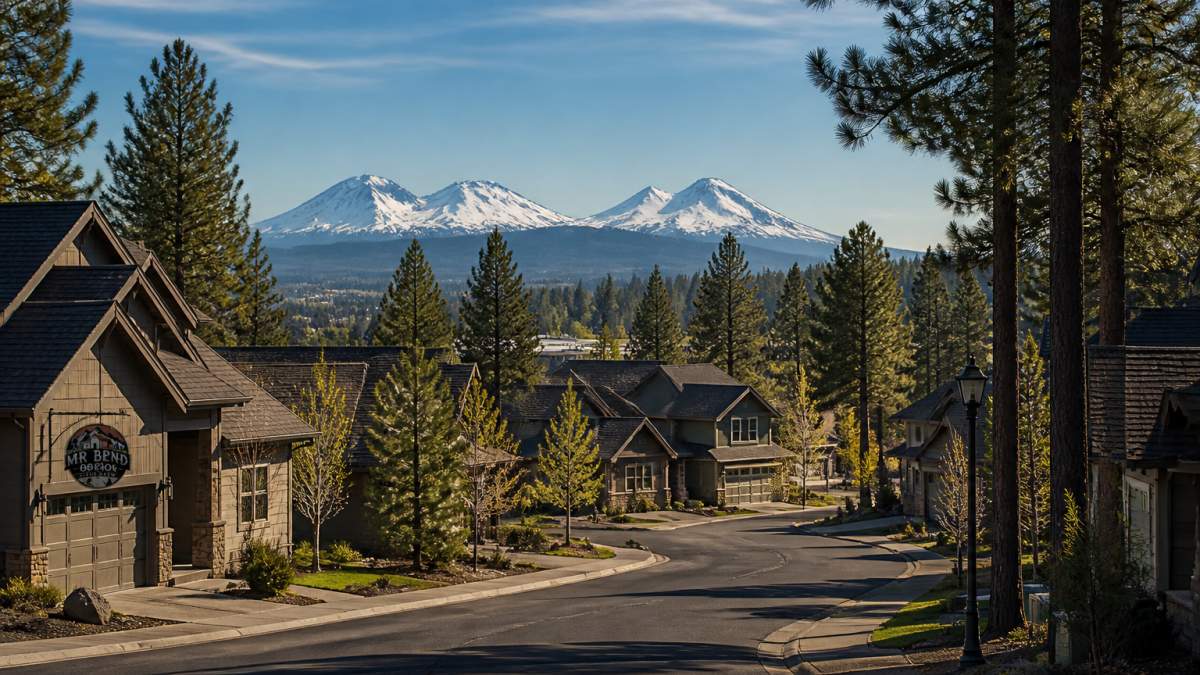
Where Boyd Acres Sits and How Highway 97 Shapes Daily Life
Boyd Acres runs along the northeast side of Bend, with Highway 97 forming its western edge. That proximity is the defining feature of daily life here: commuters reach the north end of town, the Bend Parkway, and the route toward Redmond quickly, while the Cascade Mountains and the Deschutes National Forest sit to the west for weekend recreation.
For buyers weighing convenience against quiet, this trade-off matters. Homes closer to the highway move faster and rent more easily, but they also carry more traffic noise. Streets farther east feel calmer and often appeal to families. Knowing which side of the neighborhood fits your goals is the first real decision you’ll make.
Home Types, Square Footage, Bedrooms, and Bathrooms
Housing stock in Boyd Acres leans practical. You’ll find mostly single-family homes, alongside townhomes and a smaller number of condos, with a mix of two- and three-bedroom layouts and a range of square footage. Many properties date from the neighborhood’s earlier decades, which means updated kitchens, bathrooms, and systems vary widely from home to home.
That variation is an opportunity. A well-maintained older home with good bones can be a strong long-term hold, while a dated property may need work priced into your offer. A common mistake is judging these homes by listing photos alone. In practice, the condition of the roof, HVAC, and foundation matters far more than cosmetic finishes.
Boyd Acres Price Trends and Comparable Sales: What the Numbers Show
For citywide context: Bend’s median single-family sale price was $728,000 in September 2026, with a median of 38 days on market and 3 months of inventory (Beacon Appraisal Group, October 2026).
Boyd Acres pricing generally tracks the wider Bend housing market, sitting in the middle of the range rather than at the top. Because the neighborhood is established and largely built out, values tend to move with overall buyer demand instead of sudden new-construction swings. That stability is part of the appeal for long-term owners.
To judge any single property, comparable sales do the heavy lifting. Pull recent sales of similar homes within a short radius, then adjust for square footage, bedroom and bathroom count, lot size, and condition. A home with an extra bathroom or a larger lot should command more than a smaller neighbor, and the numbers should reflect that. If a listing asks well above its comparables, ask why before you commit.
Pro Tip
When you review comparable sales, weight the three closest matches in size and condition most heavily. Distant or dissimilar comps inflate your estimate and lead to overpaying.
When you review comparable sales, weight the three closest matches in size and condition most heavily. Distant or dissimilar comps inflate your estimate and lead to overpaying.
The Investment Verdict: Where Boyd Acres Wins and Where It Doesn’t
Here is the direct answer the rest of the market dances around: Boyd Acres is a reasonable long-term hold and a workable rental market, but it is not a neighborhood where the numbers forgive a bad purchase price. The verdict depends less on the neighborhood than on three property-level variables you control, what you pay, what condition the home is in, and how you finance it.
Why the location case is genuinely strong
Boyd Acres sits on the northeast side of Bend with Highway 97 forming its western edge. That single fact drives most of the investment thesis:
- Commuter gravity. Residents reach the Bend Parkway, the north end of town, and the route toward Redmond without crossing the city. That keeps the neighborhood relevant to a wide slice of the regional workforce, not just downtown Bend employees.
- Established, built-out stock. Because the neighborhood is largely developed, you are not competing with a pipeline of new subdivisions the way buyers in outer-growth areas are. Scarcity of new supply in an established pocket tends to support resale values over time.
- Year-round demand. Bend’s economy is no longer purely seasonal. Healthcare, education, professional services, and remote work all feed steady tenant demand rather than a summer spike.
Why the verdict is conditional, not automatic
Three things routinely turn a good neighborhood into a mediocre investment:
- Overpaying for an older home. Much of the housing stock dates from earlier decades, and condition varies enormously block to block. A roof, HVAC system, or foundation issue discovered after closing can consume years of projected cash flow. The purchase price has to reflect the repair bill, not the listing photos.
- Financing assumptions. At higher interest rates, the gap between what a property rents for and what it costs to carry widens fast. A deal that cash-flowed comfortably at a lower rate can turn negative on the same purchase price. Run your numbers at your actual quoted rate, not a remembered one.
- Exit timing. Older homes in established neighborhoods can sit longer when the market cools. If your plan requires selling within a few years, Boyd Acres is a weaker fit than if you are holding a decade or more.
The honest scorecard
| Factor | Boyd Acres Read | Why |
|---|---|---|
| Rental demand | Strong | Highway 97 access, established services, year-round employment base |
| Long-term appreciation | Moderate and steady | Built-out neighborhood tracks the broader Bend market rather than outpacing it |
| Short-term flip potential | Weak | Older stock, renovation risk, no new-construction premium to capture |
| Entry-price flexibility | Moderate | Middle-of-the-range pricing leaves room to negotiate on condition |
| Risk profile | Manageable with discipline | Property condition and financing terms drive outcomes more than the neighborhood does |
Key Takeaway
Treat Boyd Acres as a buy-and-hold neighborhood, not a momentum play. The investment case holds when you buy below comparable-sales value, budget for deferred maintenance, and underwrite at conservative rent and vacancy assumptions. It weakens the moment any of those three slip.
Treat Boyd Acres as a buy-and-hold neighborhood, not a momentum play. The investment case holds when you buy below comparable-sales value, budget for deferred maintenance, and underwrite at conservative rent and vacancy assumptions. It weakens the moment any of those three slip.
If you want a single rule of thumb: Boyd Acres rewards the buyer who does the boring work, inspection, comps, repair estimates, financing math, and punishes the buyer who buys on location alone.
Boyd Acres Rental Properties: Demand, Rents, and Who Rents Here
Boyd Acres rental properties attract a dependable mix of tenants. The neighborhood’s access to Highway 97 makes it convenient for commuters working across Bend and toward Redmond, while the surrounding services appeal to families and long-term residents. That blend tends to produce longer tenancies than neighborhoods dominated by transient renters.
Rental demand here is steady rather than seasonal, which matters for cash flow. When you evaluate a potential rental, look at how quickly comparable units lease and how often they turn over. A unit that rents fast and stays occupied protects your income more than a slightly higher rent that sits vacant for months.
Watch Out
Underestimating vacancy is the most common mistake new landlords make. If you budget as though your Boyd Acres rental is occupied every month of the year, a single turnover can wipe out your projected cash flow. Always model a realistic vacancy allowance.
Underestimating vacancy is the most common mistake new landlords make. If you budget as though your Boyd Acres rental is occupied every month of the year, a single turnover can wipe out your projected cash flow. Always model a realistic vacancy allowance.
Running the Numbers With a Rental Property Cash Flow Calculator
A rental property cash flow calculator turns a promising listing into a clear yes or no. The tool subtracts your operating expenses and mortgage payment from rental income to show what the property actually puts in your pocket each month. If the number is negative, you’re subsidizing the investment and hoping appreciation bails you out.
To use one well, feed it honest inputs: realistic rent, a vacancy allowance, and every expense you expect to carry. Then test a few scenarios. What happens if rent drops slightly or a major repair lands in year one? A property that still cash-flows under conservative assumptions is worth pursuing. One that only works on rosy numbers is a risk.
| Calculator Input | What to Enter | Why It Matters |
|---|---|---|
| Monthly rent | Comparable leased units nearby | Sets your income baseline |
| Vacancy allowance | A realistic empty-month estimate | Protects against turnover gaps |
| Operating expenses | Taxes, insurance, maintenance, management | Determines true net income |
| Mortgage payment | Your actual loan terms | Reveals real cash flow |
The Investment Property Expenses Checklist for a Boyd Acres Purchase
An investment property expenses checklist keeps surprises out of your budget. Beyond the mortgage, a Boyd Acres rental carries recurring costs that many first-time investors overlook until they hit. Build these into your analysis before you make an offer.
- Property taxes and landlord insurance
- Routine maintenance and a repair reserve
- Property management fees, if you use a manager
- Utilities the owner covers, such as water or landscaping
- HOA dues, where the property has them
- Turnover costs between tenants, including cleaning and minor repairs
- A capital reserve for big-ticket items like the roof or HVAC
Add these up honestly. If the rent doesn’t comfortably cover them plus your mortgage, the deal needs a lower purchase price or a different property.
Long-Term Rental Property in Bend: Why Boyd Acres Fits the Strategy
A long-term rental property in Bend rewards owners who think in decades, not months. Boyd Acres suits that approach because its established homes, steady tenant base, and central location keep it relevant through market cycles. You’re not betting on a trendy pocket; you’re buying into a neighborhood people consistently want to live in.
This is where local guidance pays off. Our team at I Sell Bend Oregon has spent more than 30 years working in Central Oregon real estate, and we know how individual streets, home conditions, and rental demand differ block by block. That knowledge helps buyers avoid overpaying and choose properties that hold up as rentals. If you’re planning a move or an investment, our relocation services walk through what to expect, and our neighbourhood tours on the Mr. Bend Oregon real estate YouTube channel give you a feel for the area before you visit.
Boyd Acres vs Other Bend Neighborhoods: An Honest Comparison
Most pages that rank for this query either profile Boyd Acres in isolation or give generic Bend investing advice. Almost none put Boyd Acres side by side with the neighborhoods a buyer is actually choosing between. That comparison is the real decision, so here it is.
The realistic alternatives
A buyer considering Boyd Acres is usually also weighing:
- Northwest Crossing and westside Bend, newer, walkable, higher-priced, with strong resale prestige.
- Southeast Bend and the Third Street corridor, closer to services and the hospital, mixed housing ages, strong rental demand.
- Outer northeast and the Redmond corridor, lower entry prices, newer construction, longer commutes.
- Downtown and near-downtown pockets, walkability and short-term-rental appeal, higher per-square-foot costs and tighter regulation.
Side-by-side trade-offs
| Neighborhood | Relative Entry Price | Rental Demand | Appreciation Character | Main Trade-Off |
|---|---|---|---|---|
| Boyd Acres | Middle of the range | Steady, year-round | Moderate, tracks the broader market | Older housing stock and condition risk |
| Northwest Crossing / westside | Higher | Strong | Stronger, prestige-driven | Higher entry cost compresses yield |
| Southeast Bend / Third Street | Middle to higher | Strong | Moderate | Less inventory, more competition per listing |
| Outer northeast / Redmond corridor | Lower | Moderate | Newer-construction driven | Longer commute, thinner amenity base |
| Downtown / near-downtown | Higher per square foot | Strong but regulated | Volatile with tourism | Short-term-rental rules and turnover costs |
How to actually choose
The right pick depends on which constraint binds you hardest:
- If entry price is the binding constraint, the outer northeast and Redmond corridor win on cost but cost you commute time and, often, rental depth.
- If cash flow is the binding constraint, Boyd Acres competes well because middle-of-the-range pricing leaves more room for rent to cover carrying costs than westside or downtown purchases do.
- If appreciation is the binding constraint, westside and Northwest Crossing have historically led, but you pay for that upside at acquisition.
- If lifestyle is the binding constraint, downtown and Northwest Crossing win on walkability, and Boyd Acres trades that away for space, parking, and highway access.
Pro Tip
Do not compare neighborhoods on price alone. Compare them on price relative to rent and price relative to condition. A cheaper home that needs a new roof can cost more over five years than a pricier home that is turnkey.
Do not compare neighborhoods on price alone. Compare them on price relative to rent and price relative to condition. A cheaper home that needs a new roof can cost more over five years than a pricier home that is turnkey.
The honest summary: Boyd Acres is the middle-ground pick. It rarely wins on any single dimension, but it avoids the worst outcome on most of them, which is exactly why it works for patient, long-hold buyers and why it frustrates anyone chasing a fast win.
Risk Analysis: What Could Go Wrong With a Boyd Acres Investment
Every investment carries risk, and Boyd Acres is no exception. The biggest is overpaying for an older home without accounting for the repairs it needs. A roof, HVAC system, or foundation issue can consume years of projected cash flow if you didn’t price it in. A thorough inspection and a realistic repair estimate are non-negotiable.
Market risk is the second factor. If Bend’s housing market cools, older homes in established neighborhoods can sit longer before selling, which matters if you need to exit quickly. Rental risk is milder here because demand is steady, but a prolonged vacancy still hurts. The way to manage all three is conservative underwriting: assume higher costs and lower rents than the optimistic case, and only proceed if the numbers still work.
Conclusion: Who Should Buy in Boyd Acres, and Who Should Look Elsewhere
Boyd Acres fits buyers who want a practical, well-located Bend neighborhood with dependable rental demand and room for long-term appreciation. It’s a strong choice for first-time homebuyers, relocating families, and investors building a long-term rental portfolio. It’s a weaker fit for anyone chasing fast flips or the prestige of Bend’s pricier districts.
If you’re ready to explore what’s available, the right local partner makes the difference. At I Sell Bend Oregon, we bring over 30 years of Central Oregon experience, a family-led team, and the reach of our eXp Realty affiliation to every search. We help you evaluate comparable sales, run the numbers on a rental, and find a property that fits your goals. Get started with I Sell Bend Oregon and search with confidence.
Frequently Asked Questions
What should you consider before buying an investment property in Boyd Acres?
Start with the numbers that decide the deal: purchase price against current comparable sales, realistic monthly rent, and the full expense load. Then look at the property itself, including roof age, heating and cooling systems, and any deferred maintenance. Boyd Acres has a mix of housing stock, so condition varies a lot from one listing to the next. Finally, confirm how the layout fits your strategy. A three-bedroom single-family home attracts a different renter than a townhome or condo, and that difference shows up in vacancy and turnover.
How can you estimate rental income for a Boyd Acres home?
Pull active rental listings in Boyd Acres and nearby Bend neighborhoods, then compare only properties with similar square footage, bedroom and bathroom counts, and condition. Asking rents are not the same as collected rents, so discount for vacancy and for the gap between listing price and what a tenant actually signs. A rental property cash flow calculator helps here: enter rent, then subtract mortgage principal and interest, property taxes, insurance, and a maintenance reserve. If the result is thin at realistic rent, the deal does not work at that price.
How does Boyd Acres compare with other Bend neighborhoods for real estate investment?
Boyd Acres generally offers lower entry prices than close-in westside neighborhoods, which improves cash flow math but usually means slower appreciation. Neighborhoods closer to downtown and the river corridor tend to carry higher prices and stronger long-term value growth, with thinner rental yields. North and east Bend areas often sit in the middle. The right choice depends on whether you are optimizing for monthly cash flow, long-term appreciation, or a balance of both, and on how much management work you want.
What local factors can affect a Boyd Acres home’s resale value?
Access to Highway 97 is the biggest one. It makes the neighborhood convenient for commuters and renters, but homes directly against the corridor carry more noise, which narrows the buyer pool at resale. Ongoing development and new construction in the area can add amenities and support values, while also adding competing inventory when you sell. School attendance boundaries, lot size, and whether the home has been updated all move the needle. Buyers should weigh these factors at purchase, because they will resurface when it is time to sell.