

Table of Contents
- What to Expect from Bend Oregon Relocation Services in 2026
- The Best Moving Companies in the Area: What to Compare
- How Movers Actually Price a Move
- Full-Service Movers vs. Labor-Only Assistance
- Red Flags and Credential Checks
- Storage, Insurance, and Protecting Your Household Goods
- Relocation Logistics for Remote Workers
- Neighborhood-Specific Relocation: Finding Your Fit
- Pet-Friendly and Cost-of-Living Transition Planning
- Conclusion: Making Your Bend Oregon Relocation Smooth
- Hiring Professional Packers vs. DIY: Which Saves You More?
- How to Prepare for Winter Moves in Central Oregon
- Storage, Insurance, and Protecting Your Household Goods
- Relocation Logistics for Remote Workers Moving to Bend
- Neighborhood-Specific Relocation: Finding Your Fit in Bend
- Pet-Friendly and Cost-of-Living Transition Planning
- Conclusion: Making Your Bend Oregon Relocation Smooth
- Frequently Asked Questions
Last Updated: September 27, 2026
What to Expect from Bend Oregon Relocation Services in 2026
Bend Oregon relocation in 2026 means more remote workers, more sellers weighing timing, and more families treating the move as their first big decision here. This guide from I Sell Bend Oregon covers what relocation services do, where they earn their keep, and what you can handle yourself.
Relocation services handle logistics (packing, loading, transport, storage); a local real estate team handles neighborhood fit, timing, and price. Most people need both, but confusing them is the most common mistake we see.
The Best Moving Companies in the Area: What to Compare
The “best” moving company matches your move type, timeline, and budget, not the flashiest website. Compare quotes on licensing, insurance, pricing structure, and how they handle a service estimate.
- Licensed and insured status. For interstate moving, verify the carrier’s registration through the FMCSA’s mover registration lookup. That lookup shows the carrier’s legal name, registration status, and complaint history. For moves within the state, ask for the company’s state authority and insurance certificate directly.
- Pricing structure. Hourly rates suit local moves where distance is short and predictable. Flat-rate pricing suits moves with a fixed inventory. Ask which one applies and why.
- Service estimate format. A reputable company offers an in-home or video survey before quoting. Phone-only estimates are a red flag for long-distance logistics.
- Damage prevention history. Ask how they handle claims and whether they use blankets, shrink wrap, and custom crating for fragile items.
How Movers Actually Price a Move
Understanding pricing is the fastest way to spot an inflated quote. Local moves bill hourly with a minimum plus travel time, and crew size is the biggest lever. Long-distance moves price by weight and mileage, so the same household can quote very differently depending on estimate type.
- Binding estimate: price locked if your inventory matches the survey. Best when inventory is settled.
- Non-binding estimate: final bill moves with actual weight and services. Common with phone quotes and the source of most billing surprises.
- Guaranteed not-to-exceed: a ceiling price if the load runs heavy. Ask for this if inventory might grow.
The lowest quote is often non-binding and the highest binding, so ask every company for the same estimate type.
Full-Service Movers vs. Labor-Only Assistance
Full-service movers handle packing, loading, transport, unloading, and often furniture assembly. Labor-only means you rent the truck and hire a loading crew: cheaper and more controllable, but driving, transit time, and liability are on you. Full-service is usually worth it for out-of-state moves; labor-only often makes sense for a short in-town move.
A middle path: “you pack, we drive,” where the company loads and transports but you pack. It splits the cost difference and keeps carrier liability on the transport leg, where most damage happens.
Red Flags and Credential Checks
Watch for companies that demand a large deposit, refuse a written estimate, or show up with an unmarked truck and no paperwork. Verify the physical address and confirm the crew is employed by the company, not subcontracted without notice.
Three checks catch most problems before they start:
- Cross-reference the DOT number on the truck against the FMCSA lookup. If the name doesn’t match the registered carrier, you may be dealing with a broker, not the mover.
- Ask who handles claims. If the answer is “the driver,” that’s a warning sign. Established carriers have a claims department and a written process.
- Get the bill of lading in advance. Read the valuation section before loading day.
Pro Tip
Ask every company the same five questions in writing: Are you the carrier or a broker? Is the estimate binding? What’s the crew size? Who handles claims? What’s your cancellation policy? Comparing written answers side by side exposes the outliers fast.
Ask every company the same five questions in writing: Are you the carrier or a broker? Is the estimate binding? What’s the crew size? Who handles claims? What’s your cancellation policy? Comparing written answers side by side exposes the outliers fast.
Storage, Insurance, and Protecting Your Household Goods
Storage and insurance are the two line items people skip, then regret. If your new home isn’t ready when the truck arrives, you’ll need storage. Climate-controlled storage matters here because temperature swings and low humidity can warp wood furniture and damage electronics over weeks.
On insurance: standard carrier liability is not full-value protection. Basic liability pays by weight, which rarely covers replacement cost. Ask for valuation options in writing and decide before the truck is loaded. If you’re storing goods for more than a few weeks, confirm whether your homeowner’s or renter’s policy extends to off-site storage, or whether you need a separate rider.
Watch Out
Signing the bill of lading without reading the liability section is the single most expensive mistake in a move. Once you sign, you’ve accepted the carrier’s valuation terms, and disputing damage afterward becomes significantly harder.
Signing the bill of lading without reading the liability section is the single most expensive mistake in a move. Once you sign, you’ve accepted the carrier’s valuation terms, and disputing damage afterward becomes significantly harder.
Relocation Logistics for Remote Workers
Remote workers face a logistics problem traditional movers don’t solve: you need reliable internet before you need your furniture. If you’re moving for a remote job, sequence the move around connectivity, not around the truck.
- Confirm internet availability at your specific address before you sign a lease or close, not just the neighborhood.
- Set up a temporary workspace so you can keep working during the unpacking phase.
- Ship essential equipment separately so it doesn’t sit in a truck for a week.
- Keep a dedicated “first 48 hours” box with chargers, medications, and work documents.
This is also where a relocation coordinator earns their fee. Coordinating utilities, deliveries, and service appointments across state lines takes hours most people don’t have during a work week.
Neighborhood-Specific Relocation: Finding Your Fit
Neighborhood fit matters more than square footage, and it’s the part generic relocation directories can’t help with. Areas here vary widely in walkability, lot size, commute times, and access to trails and schools. Two homes at the same price can offer completely different daily routines.
If you’re relocating from out of state, the fastest way to narrow down where you want to live is to see the areas before you commit. Our neighborhood tours walk through what each part of town feels like, from the westside’s trail access to the quieter streets east of downtown. Pair that with a conversation about commute, schools, and weekends, and you’ll rule out half the map in an afternoon.
Pet-Friendly and Cost-of-Living Transition Planning
Two things derail relocations more than anything else: pets and money. Plan for both before the truck is booked.
Pet logistics. Confirm pet policies before you sign anything, including breed or weight restrictions, pet rent, and whether the yard is actually fenced. Book a vet in your new area before you arrive; transferring records takes longer than people expect. For the drive itself, plan pet-friendly stops and never leave an animal in a parked vehicle during a winter move, since temperature swings cut both ways.
Cost-of-living transition. Build a realistic budget for your first 90 days, not your first month. Deposits, utility setup, moving supplies, and replacing items that didn’t survive the trip all land in that window. Track your recurring costs (utilities, insurance, commuting) against what you paid before, and adjust before you commit to a mortgage payment that assumes the old numbers.
Key Takeaway
The relocation services that matter most are the ones tied to decisions you can’t undo: where you live, what you pay, and how fast you can close. Logistics can be rebooked. A bad neighborhood choice takes a year to fix.
The relocation services that matter most are the ones tied to decisions you can’t undo: where you live, what you pay, and how fast you can close. Logistics can be rebooked. A bad neighborhood choice takes a year to fix.
Conclusion: Making Your Bend Oregon Relocation Smooth
A smooth relocation comes down to sequencing: verify your movers, decide packing and storage before the truck arrives, and settle the neighborhood question before you commit to an address. Get the order wrong and you’ll pay for it twice.
That’s where I Sell Bend Oregon comes in. Our team brings over 30 years of local real estate experience, deep knowledge of Bend’s neighborhoods and lifestyle, and the reach of our eXp Realty affiliation with 80,000+ agents nationwide. Whether you’re moving across the country or across town, we provide personalized guidance from first search to closing day.
Start Your Search with I Sell Bend Oregon and move into a home that actually fits how you want to live.
Hiring Professional Packers vs. DIY: Which Saves You More?
Professional packing saves time and reduces breakage but isn’t automatically cheaper. DIY packing saves money on labor and materials you already own, but costs weekends and raises the odds of a damaged item you’ll replace yourself.
A practical split works for most households:
- Pack yourself: books, clothing, linens, kitchenware, and anything you don’t mind replacing.
- Hire out: artwork, mirrors, electronics, large furniture, and anything with sentimental or resale value.
- Always hire out: pianos, pool tables, and items requiring crating.
The real cost of DIY packing isn’t boxes, it’s time. A three-bedroom home can take 40+ hours to pack properly, and rushed packing is where most damage claims originate.
Pro Tip
Ask your mover for a “packing only” quote even if you’re doing a full-service move. Many companies price packing separately, and you can often mix professional packing for fragile rooms with DIY for the rest, which keeps costs down without risking your valuables.
Ask your mover for a “packing only” quote even if you’re doing a full-service move. Many companies price packing separately, and you can often mix professional packing for fragile rooms with DIY for the rest, which keeps costs down without risking your valuables.
How to Prepare for Winter Moves in Central Oregon
Winter moves in Central Oregon demand earlier planning, flexible scheduling, and gear that handles ice and snow. Snow and ice can delay trucks, close mountain passes, and turn a driveway into a hazard. If your move lands between November and March, build in buffer days and confirm your crew’s weather contingency plan before signing.
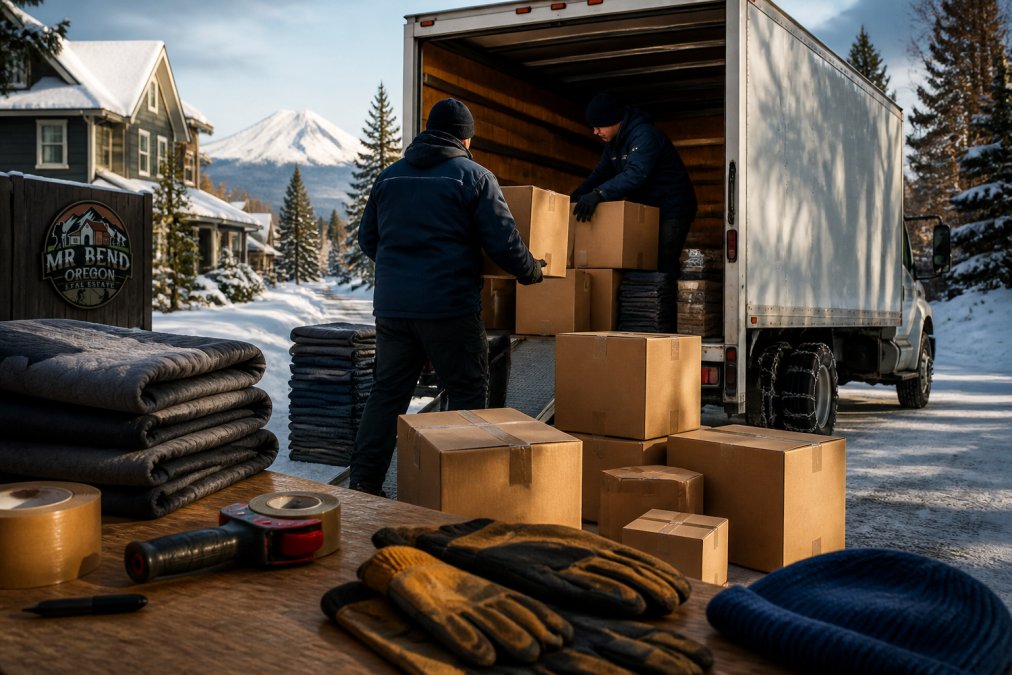
Protecting Your Home and Belongings in Cold Weather
Cold-weather damage is preventable:
- Keep the thermostat at a minimum in both homes until the last box is out, so pipes don’t freeze.
- Wrap electronics in anti-static material and let them reach room temperature before plugging in.
- Salt or sand your walkway before the crew arrives, and clear snow from the truck’s path.
- Move plants in insulated containers, and never leave them in the truck overnight.
For more on seasonal timing, our relocation guide covers the local calendar in detail.
Storage, Insurance, and Protecting Your Household Goods
Storage and insurance are the two line items people skip, then regret. If your new home isn’t ready when the truck arrives, you’ll need a storage facility. Climate-controlled storage matters in Central Oregon because temperature swings and low humidity can warp wood furniture and damage electronics over weeks.
On insurance: standard carrier liability is not full-value protection. Basic liability pays by weight, which rarely covers replacement cost. Ask for valuation options in writing and decide before the truck is loaded. If you’re storing goods for more than a few weeks, confirm whether your homeowner’s or renter’s policy extends to off-site storage, or whether you need a separate rider.
Relocation Logistics for Remote Workers Moving to Bend
Remote workers face a logistics problem traditional movers don’t solve: you need reliable internet before you need your furniture. If you’re moving for a remote job, sequence the move around connectivity, not around the truck.
- Confirm internet availability at your specific address before you sign a lease or close, not just the neighborhood.
- Set up a temporary workspace so you can keep working during the unpacking phase.
- Ship essential equipment separately so it doesn’t sit in a truck for a week.
- Keep a dedicated “first 48 hours” box with chargers, medications, and work documents.
This is also where a relocation coordinator earns their fee. Coordinating utilities, deliveries, and service appointments across state lines takes hours most people don’t have during a work week.
Neighborhood-Specific Relocation: Finding Your Fit in Bend
Neighborhood fit matters more than square footage, and it’s the part generic relocation directories can’t help with. Areas here vary widely in walkability, lot size, commute times, and access to trails and schools. Two homes at the same price can offer completely different daily routines.
Here’s how the main areas break down for relocating buyers:
- Westside (including Awbrey Butte and the river corridor). Closest to trails, the river, and downtown dining. Smaller lots, higher prices. Best for buyers who want to walk or bike to amenities and will pay a premium for location.
- Old Bend and the downtown fringe. Historic homes, mature trees, and the shortest walk to restaurants and the river. Expect older housing stock, smaller lots, and renovation projects. Best for buyers who value character and walkability over new construction.
- Northwest Crossing and westside master-planned areas. Newer homes, sidewalks, parks, and a neighborhood center. HOA fees are common. Best for families who want turnkey homes and a walkable, planned feel.
- Eastside and northeast areas. More square footage per dollar, larger lots, and quicker airport and highway access. Westside commutes run longer at peak times. Best for buyers who prioritize space and value over proximity to downtown.
- Outlying and rural pockets (including Tumalo and areas toward Redmond). Acreage, privacy, and room for horses or shops, with longer drives to groceries and services. Best for buyers who want land and don’t mind being car-dependent.
How to Narrow the Map Before You Visit
If you’re relocating from out of state, the fastest way to narrow down where you want to live is to see the areas before you commit. Our neighborhood tours walk through what each part of town feels like, from the westside’s trail access to the quieter streets east of downtown. Pair that with a conversation about commute, schools, and weekends, and you’ll rule out half the map in an afternoon.
A practical exercise: rank your top three priorities (walkability, lot size, commute, schools, new construction, trail access) and score each area against them. Most buyers find two areas rise to the top immediately, and the rest can be crossed off without a visit.
Seasonal and Lifestyle Factors by Area
- Snow and ice. Higher-elevation and westside areas see more snow and slower plowing on side streets. If you commute early, factor that in.
- Sun exposure. Some eastside and northeast areas get more morning sun; westside areas closer to the mountains hold shade and cooler air longer. If you garden or spend mornings outside, this matters.
- Noise and traffic. Proximity to the parkway and major arterials cuts commute time but adds road noise. Tour at rush hour, not just on a weekend.
- HOA rules. Master-planned areas often restrict short-term rentals, fencing, and exterior colors. Read the CC&Rs before you fall in love with a house.
Pro Tip
When you tour, drive the commute at the same time of day you’d actually make it, and check the walk score and trail access for the specific address, not the neighborhood average. Micro-location within an area can change the daily experience more than the area itself.
When you tour, drive the commute at the same time of day you’d actually make it, and check the walk score and trail access for the specific address, not the neighborhood average. Micro-location within an area can change the daily experience more than the area itself.
If you want a shortcut, reach out and I’ll walk you through which areas match your priorities before you book a trip. That conversation usually saves buyers a wasted weekend touring homes that were never going to fit.
Pet-Friendly and Cost-of-Living Transition Planning
Two things derail relocations more than anything else: pets and money. Plan for both before the truck is booked.
Pet logistics. Confirm pet policies before you sign anything, including breed or weight restrictions, pet rent, and whether the yard is actually fenced. Book a vet in your new area before you arrive; transferring records takes longer than people expect. For the drive itself, plan pet-friendly stops and never leave an animal in a parked vehicle during a winter move, since temperature swings cut both ways.
Cost-of-living transition. Build a realistic budget for your first 90 days, not your first month. Deposits, utility setup, moving supplies, and replacing items that didn’t survive the trip all land in that window. Track your recurring costs (utilities, insurance, commuting) against what you paid before, and adjust before you commit to a mortgage payment that assumes the old numbers.
Conclusion: Making Your Bend Oregon Relocation Smooth
A smooth relocation comes down to sequencing: verify your movers, decide packing and storage before the truck arrives, and settle the neighborhood question before you commit to an address. Get the order wrong and you’ll pay for it twice.
That’s where I Sell Bend Oregon comes in. Our team brings over 30 years of local real estate experience, deep knowledge of Bend’s neighborhoods and lifestyle, and the reach of our eXp Realty affiliation with 80,000+ agents nationwide. Whether you’re moving across the country or across town, we provide personalized guidance from first search to closing day.
Start Your Search with I Sell Bend Oregon and move into a home that actually fits how you want to live.
Frequently Asked Questions
What should I look for when hiring a moving company in Bend?
Verify the company is licensed and insured, and ask for their USDOT number if they cross state lines. Check for a physical local address and read recent customer testimonials. Get a written service estimate that details hourly rates or flat-rate pricing, and confirm whether the quote includes loading crew, moving supplies, and furniture assembly. Red flags include demands for large cash deposits upfront or no written contract.
How far in advance should I book relocation services for a Bend move?
Book at least four to six weeks ahead for local moves, and eight to twelve weeks for long-distance logistics or moves during peak summer months. Bend’s popularity as a relocation destination means reputable full-service movers fill their calendars quickly, especially for weekend slots. If you need professional packing or climate-controlled storage, add extra lead time to secure those services.
Are there specialized services for long-distance moves to Bend, Oregon?
Yes. Many interstate moving companies offer dedicated long-distance logistics, including transit time estimates, relocation coordinator support, and tracking for your household goods. Some provide concierge services like vehicle transport, temporary storage, and white-glove service for fragile items. Confirm whether the carrier is licensed for interstate moves and ask about liability coverage limits before booking.
How do I prepare for winter moves in Central Oregon?
Schedule your move for midday when temperatures are highest and roads are clearest. Confirm your movers have experience with snow and ice, and ask about property protection like floor runners and door jambs. Keep pathways shoveled and salted. Pack a winter essentials box with coats, boots, and medications. If you are hiring professional packers, ensure they use moisture-resistant materials for electronics and documents.