
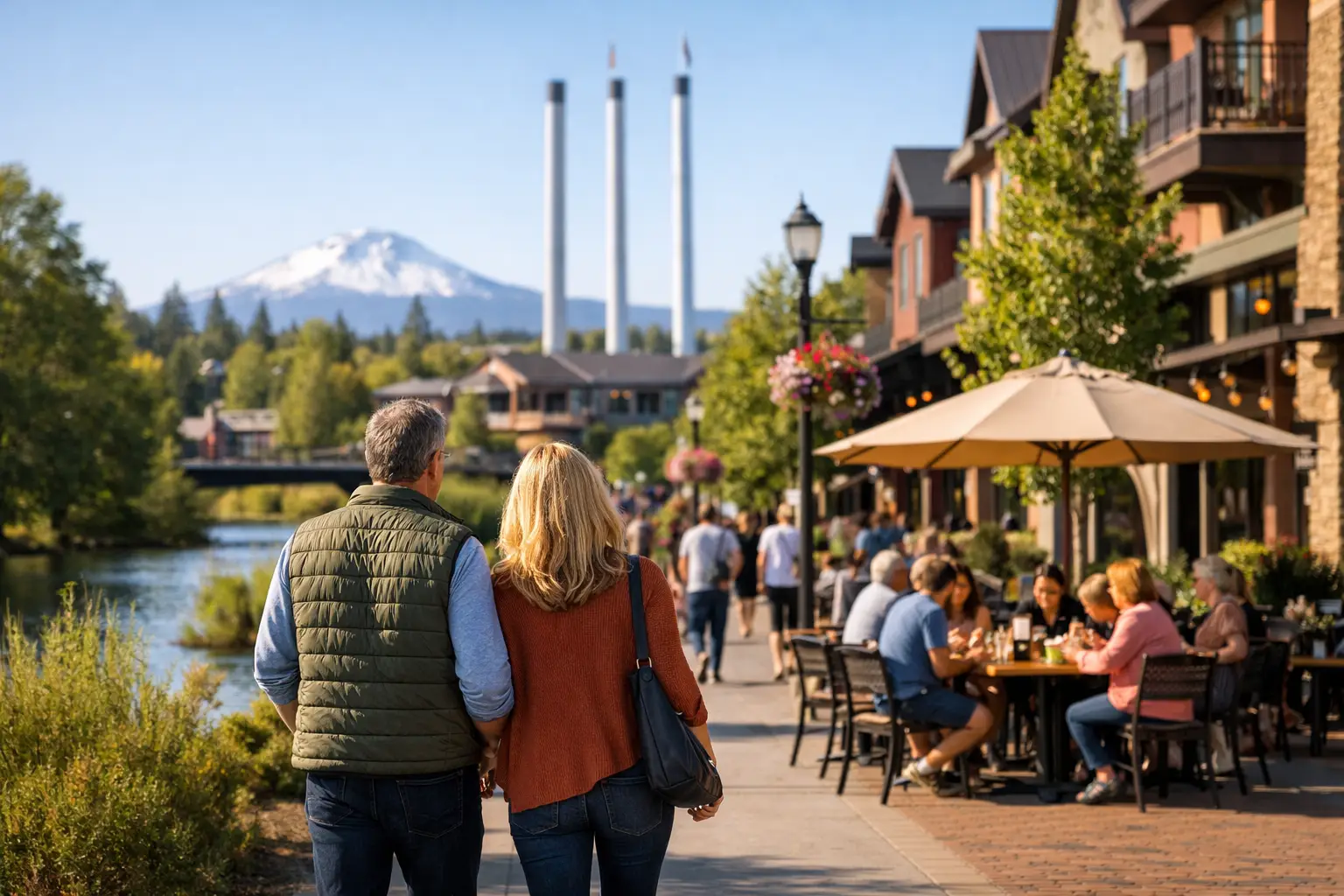
If your ideal Bend day starts with coffee on foot, a quick stop at the market, and dinner without getting back in the car, walkability is not a small detail. For many buyers, walkable neighborhoods in Bend Oregon are about more than convenience. They shape daily rhythm, resale appeal, and how connected you feel to the city.
That said, walkability in Bend does not look exactly like it does in Portland, Seattle, or San Francisco. Bend is more spread out, more lifestyle-driven, and more neighborhood-specific. You can absolutely find areas where you can walk to restaurants, parks, schools, and trails, but the experience varies a lot by location, housing type, and what you personally mean by walkable.
What walkable means in Bend
In real estate, “walkable” can mean different things to different buyers. Some people want a true leave-the-car-at-home setup with groceries, cafes, and nightlife close by. Others are really looking for easy access to parks, river trails, and a neighborhood feel where errands are partly walkable and the rest are a short drive.
That distinction matters in Bend. A neighborhood may feel highly walkable for someone who values river access and coffee shops, but less so for a buyer who wants to walk to a major grocery store, school, and medical services all in one area. The right fit depends on your stage of life and your routine.
Best walkable neighborhoods in Bend Oregon
Downtown Bend
Downtown is the most obvious answer, and for good reason. If you want the strongest mix of restaurants, coffee shops, boutiques, festivals, and everyday energy within a compact area, this is where Bend feels most traditionally walkable.
Living near downtown puts you close to Drake Park, Mirror Pond, and a long list of local businesses that make the area feel active year-round. For buyers relocating from larger metro areas, downtown often feels the most familiar because you can step outside and immediately be part of the city.
The trade-off is usually price, lot size, and inventory. Homes near downtown are often older, more distinctive, and in shorter supply. Parking can be tighter, and if you want a newer home with a large yard, downtown may not check every box. But for buyers prioritizing lifestyle over square footage, it stays near the top of the list.
Old Bend
Old Bend and downtown are closely connected, but Old Bend deserves its own mention because it offers a slightly different feel. This area gives you many of the same walkable benefits with more established residential streets and a strong sense of character.
A lot of buyers are drawn to Old Bend because it feels rooted. The homes often have charm you do not get in newer developments, and the streets invite walking for the sake of walking, not just getting from point A to point B. You are still close to downtown amenities, the Deschutes River, and parks, which adds to the appeal.
The main trade-off here is inventory and competition. When a well-located home in Old Bend hits the market, buyers tend to pay attention quickly. If this area is your target, timing and local guidance matter.
Northwest Crossing
Northwest Crossing is one of the most talked-about neighborhoods for buyers who want a master-planned community with strong walkability. It has a neighborhood commercial core, parks, tree-lined streets, and a layout that encourages people to be out on foot.
For many households, this is one of the easiest places in Bend to picture a day-to-day routine without constant driving. You can walk to coffee, restaurants, small shops, and community events, and the area has a polished, connected feel that appeals to both full-time residents and relocation buyers.
It is not the same as living downtown. The walkability is more neighborhood-centered than city-centered, which some buyers actually prefer. You get a planned environment and a strong community feel, but homes here often come at a premium, and some buyers want a little more variety or less predictability in architecture and layout.
The Box Factory and nearby Southwest Bend pockets
The Box Factory area and nearby parts of Southwest Bend have become increasingly attractive for buyers who want access to restaurants, breweries, the river corridor, and the Old Mill area. This part of town has an active, social feel and works especially well for buyers who want lifestyle amenities nearby.
Walkability here is tied to entertainment, dining, and recreation. If being able to head out for a meal, walk along the river, or spend time near shopping and gathering spots sounds ideal, this part of Bend can be a strong match.
The trade-off is that walkability may be stronger for leisure than for every errand. Depending on the exact pocket, you may still drive for certain day-to-day needs. Still, for many buyers, that is a very reasonable balance.
River West
River West consistently comes up in conversations about location because it connects well to downtown, Galveston, parks, and outdoor access. It is one of those neighborhoods where lifestyle and convenience meet in a way that feels very Bend.
This area appeals to buyers who want charm, access, and a neighborhood atmosphere without being right in the middle of downtown activity. You can often walk to local favorites, enjoy nearby green space, and feel connected to the pulse of the west side.
As with many desirable close-in neighborhoods, pricing can be a hurdle. Home styles and ages vary, and buyers sometimes need to decide whether they want turnkey condition or prime location. In River West, location often wins that debate.
What buyers should watch for when comparing walkable areas
Not all walkability adds the same value to your life. A home can be marketed as close to shops, but the actual walking experience may depend on street design, crossings, season, and whether the route feels pleasant enough to use regularly.
That is why it helps to think beyond the map. Walk the area if you can. Time how long it takes to reach the places you care about. Notice whether sidewalks are continuous, whether the route feels comfortable, and whether you would realistically make that trip on a regular Tuesday, not just on a sunny Saturday afternoon.
For relocation buyers, this is especially important. Many people moving to Bend picture a lifestyle first and then start searching by price or home style. That makes sense, but neighborhood fit should lead the process. The daily feel of a street, the ease of getting to your go-to spots, and the balance between activity and quiet can make or break how happy you are after closing.
Walkable neighborhoods in Bend Oregon for different lifestyles
If you are a young professional or remote worker, downtown, River West, and parts of the southwest side may offer the easiest mix of coffee shops, dining, recreation, and social energy. If you want newer construction and a more organized neighborhood setup, Northwest Crossing often rises to the top.
If you are a retiree or planning ahead for aging in place, walkability may mean something more practical. Proximity to daily needs, flatter routes, and easier neighborhood circulation may matter more than nightlife. In that case, the best area is not always the busiest one.
For families, the equation gets even more specific. Some buyers want the ability to walk to parks, schools, or neighborhood gathering spots, even if they still drive for major shopping. That kind of walkability can be just as valuable as living near downtown businesses.
The real estate side of walkability
Walkable locations tend to hold attention in the market because they offer a lifestyle that is hard to replicate. Even when inventory shifts, homes in well-located Bend neighborhoods often attract buyers who are willing to compromise on size or age to get the right setting.
That does not mean every walkable home is automatically the best investment. Condition, street placement, noise level, parking, and future plans for the surrounding area all matter. A house that is technically close to everything but sits in a less appealing micro-location can perform very differently from one just a few blocks away.
This is where local context matters more than a search filter. Two homes may both show up under the same neighborhood label, but one may feel connected and easy while the other feels tucked away or less practical for daily walking.
How to choose the right neighborhood
Start with your real routine, not the idealized one. Ask yourself where you want to walk three or four times a week. Coffee? Dinner? Parks? Grocery runs? River trails? Once you know what matters most, the right part of Bend gets much easier to identify.
Then balance that with your housing priorities. If you want a larger lot, newer finishes, and strong neighborhood amenities, your best option may be different from someone who wants historic character and a short stroll to downtown. There is no universal winner, only the right fit for your life.
After that, spend time on the ground. Photos and map pins help, but they do not replace local insight and firsthand experience. Buyers who take the time to compare neighborhoods block by block usually make more confident decisions and fewer compromises they regret later.
If walkability is high on your list, Bend gives you several strong options, each with its own personality. The smart move is not just finding the most walkable spot. It is finding the one that feels natural for the way you actually want to live, and that is where experienced local guidance can save you time and help you choose well.